
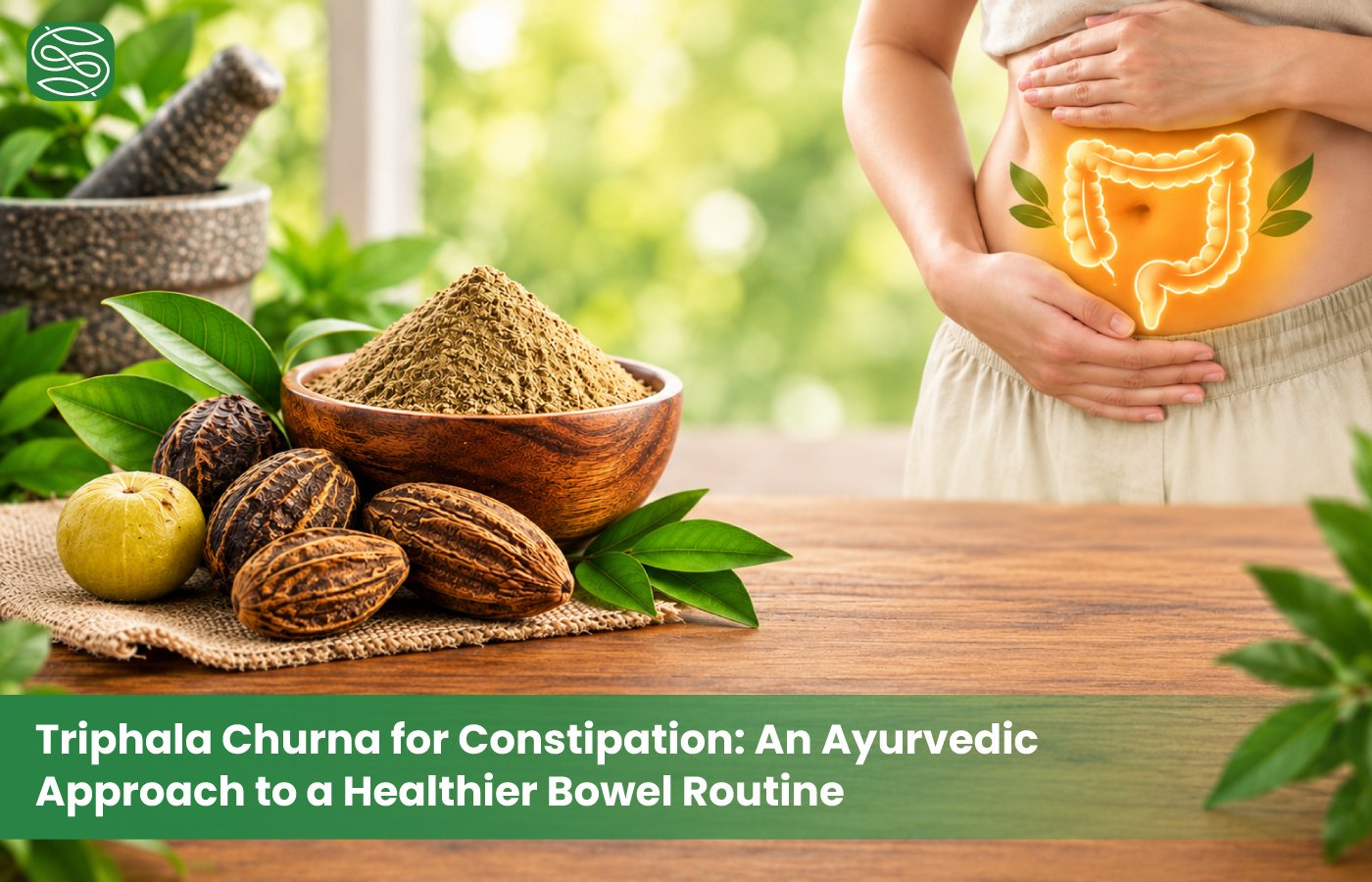
Common symptoms include abdominal pain and distension, flatulence, bloating, body heaviness, lack of appetite, indigestion, and acidity. These symptoms can often be linked with irregular bowel movements and digestive imbalance.
Constipation is a very common problem faced by people, yet it is one of the last topics discussed openly, even with doctors. Regular bowel movements are important because they are the body’s natural way of removing waste and supporting digestive health.
Ayurveda highlights the importance of maintaining natural bodily urges and regular elimination. If you experience difficulty passing stool, fewer than three bowel movements per week, hard stools, or painful defecation, understanding the underlying cause becomes important.
In Ayurveda, maintaining regular and comfortable bowel elimination (Vatanulomana) is considered an important part of overall health. One classical Ayurvedic formulation traditionally used to support bowel regularity is Triphala Churna.
Made from three fruits Amalaki, Haritaki and Bibhitaki, Triphala has been traditionally used in Ayurveda as a Rasayana and to support healthy digestion and elimination.
But how does Triphala fit into modern constipation management? How should Triphala Churna for Constipation be used? And is it suitable for everyone?
Let’s explore.
What is Triphala Churna for Constipation?
Triphala literally means “three fruits.”
It is traditionally prepared using:
- Amalaki (Emblica officinalis) – traditionally associated with nourishment and rejuvenation
- Haritaki (Terminalia chebula) – traditionally valued for digestive and bowel support
- Bibhitaki (Terminalia bellirica) – traditionally used to support digestive health
The combination is important because Ayurveda does not view Triphala simply as a laxative.
Traditionally, Triphala is considered a gentle formulation that can support digestion, elimination and overall gut balance when appropriately selected and used.
This is one reason it continues to be one of the best-known classical Ayurvedic formulations for maintaining a healthy bowel routine.
Triphala Churna for Constipation: How Can It Help?
Constipation can have several contributing factors, including low fibre intake, inadequate fluid intake, reduced physical activity, changes in routine, stress, certain medications and underlying medical conditions.
From an Ayurvedic perspective, constipation is commonly associated with an imbalance of Vata, particularly when Apana Vata is disturbed.
Triphala is traditionally used to support healthy elimination and Vatanulomana.
Its role can be thought of in three broad areas:
1. Supporting regular bowel movements
Triphala Churna for Constipation is traditionally used to support comfortable, regular elimination.
For someone whose constipation is associated with an irregular bowel routine, it may be used as part of a broader digestive-health plan.
2. Supporting digestive function
Ayurveda places considerable importance on healthy digestion (Agni).
Rather than focusing only on forcing bowel movements, the traditional approach looks at the entire digestive process: diet, digestion, lifestyle, sleep, stress and elimination.
3. Supporting overall gut health
Researchers have studied Triphala for several biological effects, including antioxidant and gastrointestinal effects. However, evidence from human clinical studies is still developing, and Triphala should not be presented as a guaranteed treatment for every type of constipation.
The most appropriate use depends on the individual.
Triphala Is More Than a “Natural Laxative”
One of the most common misconceptions is: “Triphala is simply an Ayurvedic laxative.”
That is an oversimplification. In classical Ayurveda, Triphala has a much broader role.
It is traditionally described as a Rasayana (Rejuvenation) and is used in different contexts depending on the individual’s constitution, digestion, bowel pattern and health needs.
What Does “Healthy Bowel Routine” Actually Mean?
A healthy bowel routine isn’t necessarily about having a bowel movement at exactly the same time every day.
A healthier goal is:
- Regular bowel movements
- Soft, formed stools
- Minimal or no straining
- Comfortable evacuation
- A feeling of satisfactory emptying
- Minimal bloating or abdominal discomfort
- A routine that is sustainable without constantly depending on strong laxatives
The frequency of bowel movements can vary considerably between healthy individuals. So, “daily stool” is not the only definition of good bowel health.
How Is Triphala Traditionally Taken for Constipation?
Triphala is commonly available as churna (powder), tablets or capsules.
The appropriate form and quantity can vary by individual and formulation.
Traditionally, Triphala Churna may be taken with warm water, often as part of a bedtime routine.
However, there is no single dose that is appropriate for everyone.
The amount may need to be adjusted depending on:
- Age
- Digestive strength
- Severity and duration of constipation
- Stool consistency
- Hydration
- Diet
- Other medicines
- Individual Ayurvedic assessment
Taking more does not necessarily mean better results. Excessive use can cause loose stools, abdominal discomfort or cramping.
If constipation is persistent, recurrent or severe, professional medical or Ayurvedic guidance is preferable to self-escalating the dose.
Triphala Churna for Constipation & Lifestyle: The Combination Matters
Taking Triphala Churna for Constipation while continuing the habits that contribute to constipation is unlikely to be the best long-term strategy.
Think of bowel health as a daily routine, not a single supplement.
1. Start the morning with hydration
Adequate fluid intake supports normal stool consistency.
Instead of waiting until you feel thirsty, maintain hydration throughout the day according to your individual needs.
2. Increase dietary fibre gradually
Include fibre-rich foods such as:
- Vegetables, especially radish
- Fruits like guava, apples and kiwi
- Whole grains
- Oats
- Pulses
- Legumes
- Nuts and seeds
If your diet is currently low in fibre, increase it gradually. A sudden large increase may worsen bloating in some people.
3. Move your body
Walking and regular physical activity can support normal bowel function.
Even a simple daily walk after a meal regularly helps in good bowel movements.
4. Don’t ignore the urge
Repeatedly postponing bowel movements can interfere with establishing a comfortable bowel habit.
Give yourself enough time in the morning rather than rushing through the process.
5. Pay attention to stress and sleep
The gut and nervous system are closely connected.
Poor sleep, chronic stress, irregular meal timings and sedentary routines can all influence digestive comfort and bowel habits.
Triphala Churna for Constipation: What Does Research Say?
Modern research has investigated Triphala for several areas of health, including gastrointestinal function, antioxidant activity and its potential effects on the gut.
However, it is important to distinguish between:
- Traditional Ayurvedic use
- Laboratory research
- Clinical human evidence
These are not the same thing.
While Triphala has a long history of traditional use for more than 5,000 years in Ayurveda and preliminary scientific evidence is interesting, more high-quality human clinical research is needed for its effectiveness for chronic constipation.
Therefore, Triphala is best considered a traditional Ayurvedic option that may support bowel regularity, rather than a universal cure for constipation.
Who May Benefit From Considering Triphala Churna for Constipation?
Triphala may be considered as part of an individualized approach for adults experiencing mild or occasional constipation, particularly when the goal is to establish a healthier digestive and bowel routine.
It may also be considered by those looking for weight management support, as maintaining digestive health is an important part of overall wellbeing.
However, the underlying cause matters.
Constipation associated with:
- Low-fibre diet
- Sedentary lifestyle
- Irregular routine
- Inadequate hydration
- Occasional dietary changes
may require a different approach from constipation caused by medication, metabolic conditions, neurological disorders or structural problems.
That is why persistent constipation deserves proper assessment.
When Should You NOT Simply Treat Constipation at Home?
Constipation should not automatically be treated with Triphala or another laxative when warning signs are present.
Seek medical evaluation if constipation is associated with:
- Blood in the stool
- Unexplained weight loss
- Persistent or severe abdominal pain
- Vomiting
- Significant abdominal swelling
- Fever
- New-onset constipation, particularly later in adulthood
- Persistent change in bowel habits
- Severe or worsening symptoms
- Inability to pass stool or gas
These symptoms may require investigation for an underlying medical problem.
Is Triphala Churna for Constipation Safe for Everyone?
No herbal formulation is automatically appropriate for everyone simply because it is “natural.”
Extra caution may be appropriate for people who:
- Are pregnant or breastfeeding
- Have significant gastrointestinal disease
- Have frequent diarrhoea or loose stools
- Are taking multiple medications
- Have significant dehydration
- Have kidney or other chronic medical conditions
People already taking medications should discuss regular Triphala use with an appropriately qualified healthcare professional, particularly if it is being used for an extended period.
Triphala Churna for Constipation vs. Strong Laxatives
The goal of a healthy bowel routine should not be to create an urgent bowel movement every morning.
Strong stimulant laxatives can produce a more immediate effect, but constipation management should ideally address the reason behind the irregular bowel habit.
Ayurveda traditionally takes a broader approach looking at:
Diet → Digestion → Lifestyle → Sleep → Stress → Bowel pattern → Individual constitution
Triphala can be one component of this approach, rather than the entire solution.
A Simple Ayurvedic Solution for Constipation Routine
Ayurveda Dinacharya or daily regimen insists on evacuating bowels in the early morning.
Overcome the problem by taking a few simple steps in your daily routine:
- Increase your water intake. Drink a glass of lukewarm water early morning on an empty stomach. You can add a few drops of lemon or try wheatgrass powder for additional benefits.
- Include plenty of fibre in your diet. Take fruits like kiwi, papaya, banana, pineapple, apple, orange and others regularly. Green leafy vegetables and green salads can also help support digestive health.
- Milk is traditionally considered a natural laxative. Some people may take warm milk with one teaspoon of ghee at bedtime, depending on suitability.
- Take timely meals and include regular exercise.
- Triphala is a popular Ayurvedic herbal combination traditionally used for constipation. Use it only as advised by a qualified practitioner.
- Do not hesitate to discuss your problem with your doctor. They may help you with lifestyle and diet modifications to overcome constipation naturally.
The Ayurvedic Perspective: Correct the Routine, Not Just the Stool
Constipation is often treated as an isolated digestive complaint. That means the solution may involve more than adding Triphala.
It may involve correcting:
Food + Hydration + Movement + Meal Timing + Sleep + Stress + Digestion + Bowel Habits
Triphala can be a valuable traditional Ayurvedic formulation within this larger approach, but the right formulation, dose and duration should be individualized.
Final Takeaway
Triphala Churna for Constipation is one of Ayurveda’s most widely used classical formulations for supporting digestion and bowel regularity.
Its traditional use extends beyond constipation, and modern research continues to explore its gastrointestinal and other potential effects.
If constipation is occasional and uncomplicated, Triphala Churna for Constipation may be one option to consider alongside adequate hydration, dietary fibre, physical activity and a consistent bowel routine.
But if constipation is persistent, severe, recurrent or accompanied by warning symptoms, don’t simply keep increasing herbal laxatives. Find out why the bowel routine has changed.
Healthy digestion isn’t about forcing the gut to empty. It’s about creating the conditions for the gut to function well.
Experience Ayurveda with a Personalized Approach
At Shathayu Ayurveda, we approach digestive health from an Ayurvedic perspective, with attention to individual constitution, digestion, lifestyle, diet, and bowel patterns.
Rather than treating constipation as just a symptom, a personalized consultation can help identify the broader digestive and lifestyle factors that may be contributing to an irregular bowel routine.
Because better gut health begins with understanding your body, not simply taking another laxative.
Looking for a more personalised approach to constipation and digestive health?
Talk to the doctors at Shathayu Ayurveda and take the next step with a guided consultation.
Frequently Asked Questions
Is Triphala good for constipation?
Triphala is a traditional Ayurvedic formulation commonly used to support bowel regularity and digestive health. It may be useful for some people with mild constipation, but it is not appropriate for every cause of constipation.
How long does Triphala take to work?
The response can vary significantly between individuals. Triphala should not be taken in progressively higher quantities simply because an immediate bowel movement does not occur.
Can Triphala be taken every day?
Some people use Triphala regularly, but long-term daily use should ideally be individualized. If constipation persists, identifying and addressing the underlying cause is more important than continuously increasing Triphala.
Can Triphala cause diarrhoea?
Yes. Excessive amounts may cause loose stools, abdominal discomfort or cramping in some people.
Is Triphala a probiotic?
No. Triphala is an Ayurvedic herbal formulation made from three fruits. It should not be described as a probiotic.
Can I take Triphala for chronic constipation?
Chronic constipation should be assessed rather than managed indefinitely through self-medication. A healthcare professional can help determine whether diet, lifestyle, medication, an underlying medical condition or another factor is contributing.
Should I consult an Ayurvedic doctor before taking Triphala?
Yes. A doctor can assess digestion, bowel habits, diet, health history, and current medicines before recommending Triphala.
What does an Ayurvedic consultation for constipation include?
The consultation may review bowel habits, digestion, appetite, diet, hydration, sleep, stress, and lifestyle before planning treatment.
Can diet and lifestyle support Triphala treatment?
Yes. Hydration, fibre, regular meals, movement, sleep, and healthy bowel habits can support better constipation management.
When should I visit Shathayu Clinic for constipation?
Visit Shathayu Clinic if constipation is persistent, recurrent, or does not improve with basic diet and lifestyle changes.