Skip to content
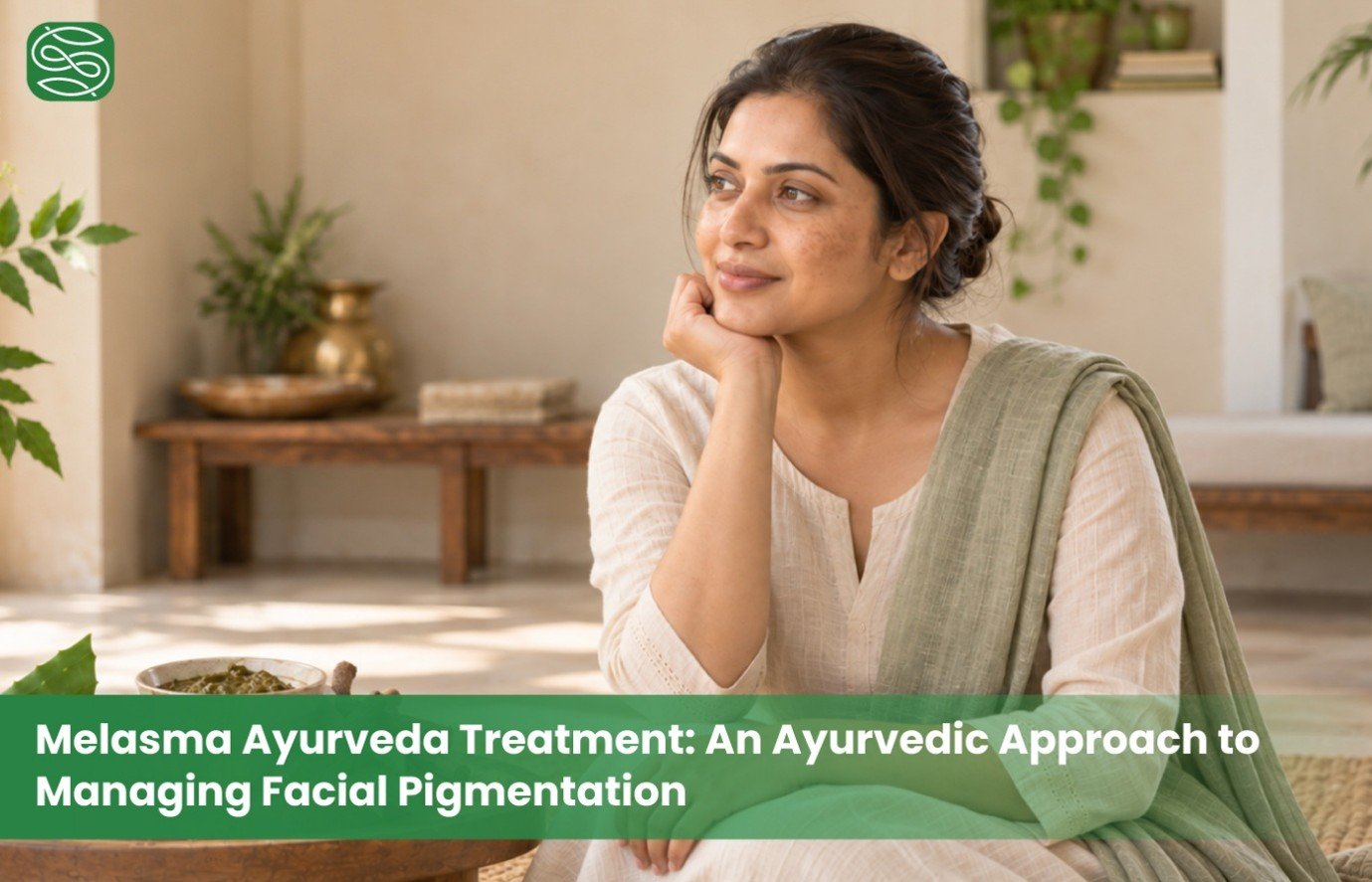
Melasma Ayurveda treatment addresses facial pigmentation through the framework of dosha balance and individual constitution. The patch itself is not treated in isolation. Dietary guidance, lifestyle adjustment and external applications form the core of most plans at Shathayu Clinic; internal formulations are introduced only where clinically appropriate, following a detailed consultation.
What Does Melasma Ayurveda Treatment Typically Involve?
- Consulation regarding diet, digestion, sleep, stress, and skin background.
- Pitta dosha and Rakta dhatu assessment, with Rakta being the tissue associated with blood in Ayurveda.
- External treatments based on skin type and sensitivity.
- Internal medication as per prescription.
- Advice regarding diet and lifestyle according to body type.
- Follow-up in accordance with pigment change and new treatment plan.
It starts off as a slight discoloration of the face in the form of a patch on cheeks, forehead, or upper lip. Even though there might be treatments for the discoloration to fade away, they come back to show up after some time. It’s a recurrent process that occurs in melasma.
The Ayurvedic approach focuses on much more than just the discoloration patches, taking into account factors like one’s constitution, digestion, lifestyle, stress, and skincare routine. The therapy at Shathayu Clinic in Bangalore begins with a personal evaluation first.
What Is Melasma?
Melasma is a case of hyperpigmentation. The brown, grey-brown or irregular spots tend to be visible on the cheeks, forehead, bridge of nose and upper lip area. Melasma predominantly affects women, and people with medium- to dark-coloured skin tones are more likely to develop this condition. Melasma is strongly related to pregnancy and is the reason why this condition is referred to as “the mask of pregnancy.”
Sunlight has an immense impact on the formation of melesma. It is well known that ultraviolet light causes melasma, and new studies show that sunlight also causes pigmentation. It is possible that pigmentation can fade away and then reoccur due to exposure.
How Does Ayurveda Understand Melasma?
The approach is based on a system that is distinct from modern-day dermatology. The doshas, especially Pitta, along with the status of Rakta dhatu or the blood tissue, in Ayurveda, serve as the foundation for evaluating skin alterations.
- Constitution or Prakriti
- Indication of aggravated Pitta
- Gut health and bowel movements
- Dietary habits
- Sleep habits
- Stress factors
- Sunlight and heat exposure
- Menstruation history
- Current skincare regime
Two patients with near-identical pigmentation frequently receive different recommendations as a result.
Why Does Melasma Often Recur?
Melasma is never caused by one factor. The most confirmed cause is sunlight exposure. Other causes include hormonal factors, pregnancy, genetics, certain medications and even specific skin features, which all contribute to the problem of reoccurrence even when treatment is successful in the first instance.
There are various options available in contemporary dermatology: topical applications, chemical peeling, and pharmaceutical treatments, as well as laser treatment for selected patients. No method provides an absolute cure for all patients. Photoprotection should be maintained daily regardless of the method chosen.
The dark skin type requires special attention in using laser treatment, as it may exacerbate the problem of pigmentation.
How Is Melasma Ayurveda Treatment Different?
Assessment at Shathayu Clinic commences with a health assessment and constitution of the patient and not a product to treat the localized area. The relevance of external applications, internal preparations, diet modification and other forms of therapy is considered before starting the therapy.
The custom-made treatment protocol may include:
- External application depending upon skin type and sensitivity.
- Internal Ayurveda preparations after consultation.
- Dietary recommendations according to constitution and imbalances.
- Lifestyle modification, including rest, stress, heat, and regularity.
- Selected treatments, if appropriate.
- Follow up for monitoring the skin and overall health.
Two treatment protocols will never be alike. Just because something is natural does not mean that it can be self-administered.
What Happens During an Ayurvedic Consultation for Melasma?
At the first appointment, the doctor at Shathayu Clinic would inquire about the period during which your pigmentation started, factors which aggravate it, and previous treatments.
It might also be queried if your pigmentation occurred along with pregnancy, change in menstrual cycle, or hormonal medications. Digestive system, eating habits, sleep patterns, stress, and nutrition complete the assessment.
After the examination, the doctor determines the course of treatment and whether it is necessary to conduct a dermatological examination as well. It may be required if the pigmentation developed rapidly, if it is peculiar and changed quickly, or if it was not adequately diagnosed before.
Can Diet and Lifestyle Help With Melasma?
Diet alone is not enough to treat melasma, but it still plays an important role in Ayurvedic treatment. In case of aggravation of Pitta, doctors can advise the reduction of foods or practices which are too heating for that person.
Recommendations usually include:
- consistent eating
- appropriate amount of spicy/oily/fried foods
- vegetables and fruits of the season
- enough drinking
- consistent sleep schedule
- stress control
- control of excessive heat and sunlight
Cucumber and coconut are cooling foods in Ayurveda and can be recommended depending on the constitution of the patient. Diet alterations should be individual, especially for people with diabetes, kidney disease, allergies and pregnancy.
Sunscreen Still Matters
Sun protection is the focal point of melasma treatment irrespective of whether one uses the Ayurveda method or dermatology or both together.
The dermatologist may advise on broad spectrum sun screen that is apt for your skin type. Hats, umbrellas, and avoiding sun during peak hours provide significant protection apart from sun screen.
Lack of sun protection causes much of the recurrence in cases when pigmentation was improving.
Ayurveda, Dermatology or Both?
Ayurveda and dermatology have their own approaches to healing. Picking one approach does not imply excluding another one. Dermatology helps to diagnose skin problems, assess the level of the issue and provide evidence-based medicine, ointments and other forms of treatment.
The Ayurvedic approach takes into account general constitution, nutrition, and lifestyle of the patient according to its own philosophy of treatment. Integration of these approaches can be appropriate for certain patients.
Any practitioner must have a complete picture of the medications, herbs, supplements, creams, and procedures the patient uses. Otherwise, combining them may cause adverse reactions.
Is Ayurvedic Melasma Treatment Safe During Pregnancy?
The hormonal changes occurring during pregnancy tend to make melasma more prominent. This does not imply that all Ayurvedic herbs and treatments are absolutely safe for use during pregnancy.
Patients who are pregnant or nursing must not use any medication at all. Any kind of medication, whether in oral form, herbal preparation, medicated oil or treatment method must be cleared with an obstetrician and an experienced physician.
According to a review published in the Journal of Cosmetic Dermatology and indexed on PubMed, pregnancy, hormonal therapies, and oral contraceptive use are frequently associated with melasma, although the exact relationship between hormonal changes and melasma development is still being studied.
When Should You See a Dermatologist?
It’s not melasma that all patches of dark skin represent. A dermatologist’s consultation can be considered if the pigmentation:
- occurs suddenly
- is developing rapidly
- is itchy, painful, or inflamed
- has an abnormal color or shape
- arises after using a new medicine or cosmetic product
- is different from what you’ve been diagnosed with in previous cases of melasma.
The dermatologist excludes other pigmentation conditions before treatment.
Melasma Ayurveda Treatment Near Bangalore
Shathayu Clinic provides consultation by doctors for individuals who are looking for Ayurvedic cure for melasma in the vicinity of Bangalore. The procedure starts with an individual assessment and not with a treatment program.
Treatment can consist of Ayurvedic medications customized for the individual, application of medicines externally, lifestyle advice, diet suggestions and certain therapies as per individual evaluation. Follow-up sessions will also be required since the pigmentation can vary and the treatment program might require modifications.
This service is very useful for individuals who have used several products but are not aware of the reason for recurring pigmentation.
A Practical Way to Think About Melasma
A melasma patient will not make much progress with unrealistic promises. Being a repetitive ailment, melasma requires patience and regular care involving protection from the sun and an understanding of what causes it.
An insight into the melasma can also be provided by the traditional Indian practice of Ayurveda using principles of constitution, lifestyle and Pitta, Rakta, along with the changes in the skin. Regardless of the system the patient chooses, it is wise to take precautions.
A patient thinking about melasma Ayurveda treatment needs to begin with a proper consultation with a qualified doctor who can evaluate their skin, medical history, and ongoing treatments before prescribing any herbs or treatment.
Want to understand whether Ayurveda can support your melasma care?
Contact Shathayu Ayurveda for a personalised consultation.
Frequently Asked Questions
Can old or deep melasma improve with Ayurvedic treatment?
Response varies between patients. Long-standing or deeper pigmentation tends to prove harder to manage than pigmentation of recent onset. Direct assessment by a qualified physician should precede any expectations about outcome.
Can melasma come back after treatment?
Yes. Recurrence is characteristic of the condition. Sun exposure, hormonal shifts and individual triggers can bring pigmentation back into view even after meaningful improvement.
Can I use sunscreen while undergoing Ayurvedic treatment?
In most cases, yes. Sun protection remains part of the plan. Inform your physician of the sunscreen and skincare products in use, especially alongside medicated Ayurvedic preparations.
Are Ayurvedic herbs completely free from side effects?
No. Herbs and external preparations can cause side effects, allergic reactions or interactions in certain patients. Use under qualified professional supervision, regardless of the “natural” label.
Is Ayurvedic treatment suitable during pregnancy?
Self-prescription is not advisable during pregnancy. Treatment decisions require input from both an obstetrician and a qualified Ayurvedic physician, since some medicines or procedures are unsuitable at this stage.
Are chemical peels or lasers bad for melasma?
Not inherently. Dermatologists use topical medicines, peels, lasers and other procedures in selected patients regularly. Individual assessment remains important beforehand, given the recurrence risk and the possibility of pigmentation change, particularly in darker skin.
How long before I see a difference?
No standard timeline applies. Outcomes depend on pigmentation type and severity, contributing triggers, treatment choice and individual responses.
Can Ayurveda permanently cure melasma?
Approach any claim of guaranteed permanent cure with caution. As a recurrent condition, melasma often requires long-term management even after visible improvement.
What factors can make melasma worse?
Sun exposure, heat, hormonal changes, pregnancy, certain medicines, stress, and unsuitable skincare may worsen pigmentation in some people. During Melasma Ayurveda Treatment, the physician reviews these triggers along with diet, digestion, lifestyle, and skin history.
Can diet alone help manage melasma?
Diet can support Melasma Ayurveda Treatment, but diet alone may not address every contributing factor. An Ayurvedic physician may combine personalised food guidance with lifestyle changes, external applications, prescribed medicines, and follow-up care based on individual assessment.
Treated at Shathayu: speak to an Ayurveda doctor about Ayurvedic skin care at any of our 16 clinics in Bangalore, or book a free consultation.