Skip to content
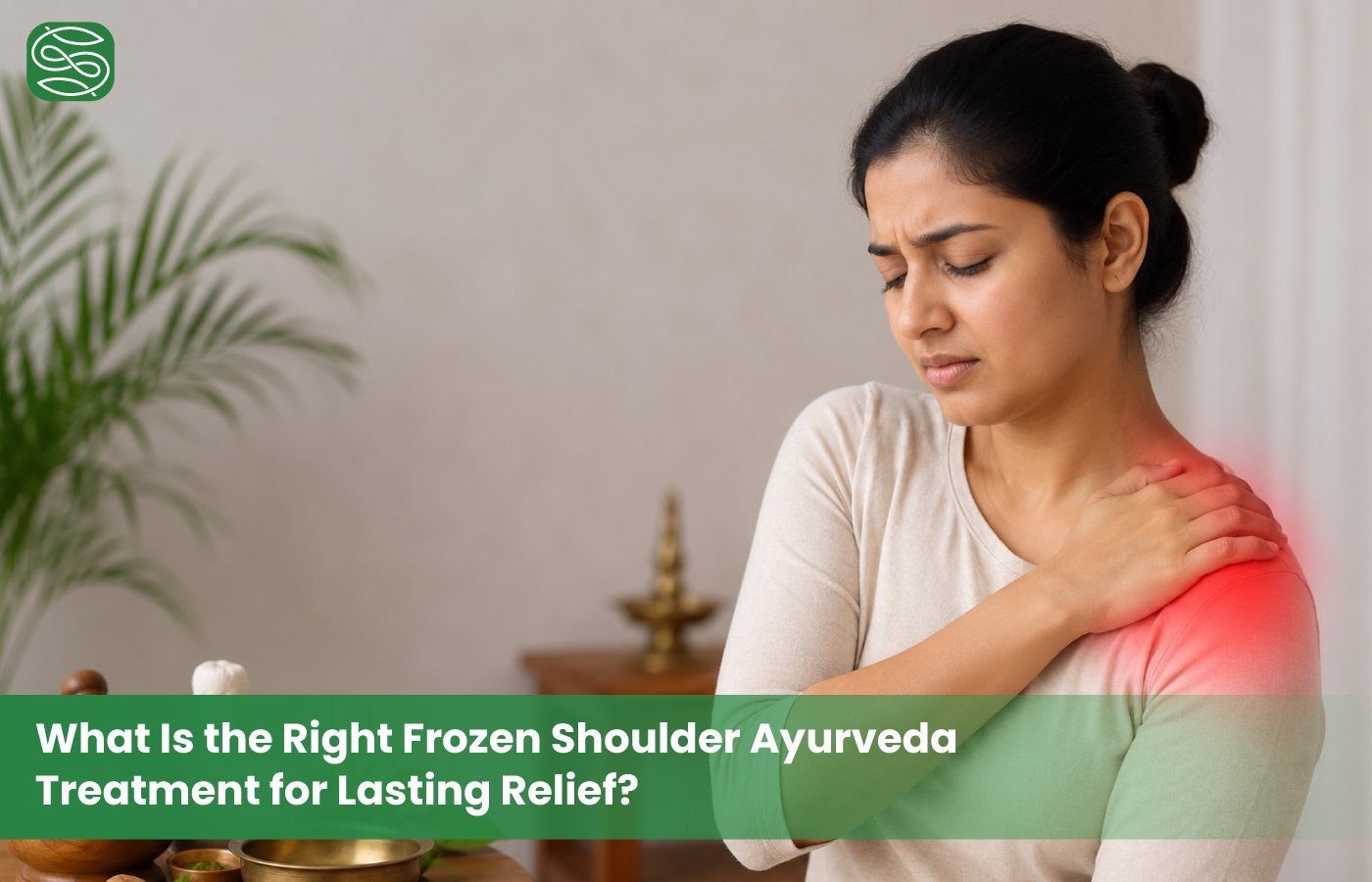
Frozen shoulder is understood in Ayurveda as Apabahuka, a condition primarily associated with aggravated Vata dosha. It is characterised by pain, stiffness, dryness, and restricted shoulder movement. At Shathayu Clinic, our Ayurvedic physicians assess the severity of pain, shoulder mobility, lifestyle, and overall health before creating an individualised treatment plan.
Meera first noticed it while reaching for a jar on the top shelf. Her shoulder caught, and she froze for a second, brushing it off as a small strain. Except the same pain showed up the next morning while she was putting on her kurta. Then again while combing her hair. A few days later, buckling her seat belt hurt, and sleeping on that side was no longer an option. A small pull had quietly turned into part of her everyday life.
That’s usually how frozen shoulder works its way in — quiet at first, then loud enough to interfere with the simplest movements. At Shathayu Clinic, frozen shoulder Ayurveda treatment starts by actually listening to this kind of story: the pain, the stiffness, the posture habits, and the lifestyle, before any therapy is prescribed.
What Happens During Frozen Shoulder?
Frozen shoulder, also called adhesive capsulitis, usually develops gradually and progresses through three stages: freezing, frozen, and thawing. In frozen shoulder, the capsule around the shoulder joint becomes tight and thick. As this happens, the shoulder slowly loses its normal range of movement. At first, the pain may appear only during certain actions, like lifting the arm or reaching behind. Over time, the stiffness can increase until the shoulder feels almost locked.
Frozen shoulder can happen after an injury, surgery, or when the arm has not been moved much for several weeks. For some people, it develops slowly because of long desk hours, repeated shoulder strain, poor posture, diabetes, thyroid problems, or weakness after an illness.
Common Causes and Risk Factors
Some factors recur time and again:
- Previous shoulder injury that didn’t heal properly.
- Sitting for long durations with poor posture.
- Exposure to excessive air conditioning, cold showers, or cold climate.
- Conditions such as diabetes, thyroid imbalance, or post-illness debility.
- Vata imbalance caused by dry, cold weather or an irregular dietary routine.
The first practical step in treating frozen shoulder in Ayurveda is therefore not to start with an oil application, but to diagnose the cause and the stage of the problem.
A BMJ Open systematic review and meta-analysis found that people with diabetes had higher chances of developing frozen shoulder, and estimated frozen shoulder prevalence among people with diabetes at 13.4%.
How Ayurveda Views Frozen Shoulder
Most cases of frozen shoulder, according to Ayurveda, result from an accumulation of Vata dosha. Since Vata controls movement, dryness, pain, and nerve activity, an excess of this dosha in the shoulder joint can make the joint dry, painful, and stiff.
Shleshaka Kapha helps keep the joints naturally lubricated. When it reduces, the shoulder joint can become dry and stiff. This is why frozen shoulder may feel worse at night, during cold weather, or after keeping the shoulder still for too long.
Frozen shoulder Ayurveda treatment aims to increase warmth, circulation, and joint flexibility, which is achieved through medicated oil, steaming, specific Panchakarma therapies, dietary corrections, and purposeful movement.
Why the Stage of Frozen Shoulder Matters
Freezing Stage
The first stage is usually the most painful. Shoulder movement reduces quickly, and the pain may disturb sleep. At this stage, treatment is kept gentle, with the aim of calming Vata, easing pain, and preventing the stiffness from worsening.
Frozen Stage
In this stage, the pain may reduce slightly, but stiffness becomes more noticeable. The shoulder feels tight, and simple actions that were once easy can become difficult. Treatment at this stage focuses on loosening the stiffness, improving blood flow, and slowly restoring movement.
Thawing Stage
This is the recovery stage. Shoulder movement slowly starts to return, but the joint may still feel weak or restricted. Gentle exercises, yoga, and continued therapy can help rebuild strength, flexibility, and confidence in movement.
Why does the stage matter so much? Pushing the shoulder too hard during the painful stage causes discomfort to spike. Avoid movement altogether once things ease up, and recovery drags on longer than it should.
Key Ayurvedic Therapies for Frozen Shoulder
At Shathayu Clinic, no medicines are recommended until a proper assessment is done by the physician. The plan varies from person to person, but the end result remains the same: reduced stiffness and pain, improved circulation, and improved shoulder mobility.
Abhyanga
Also called a warm oil massage, Abhyanga softens the stiffness that forms around the shoulder joint. The warmth calms the muscle tissues and balances Vata dosha while preparing the body for further therapies. According to individual needs, different oils may be used for this therapy: Mahanarayana Taila, Dhanwantara Taila, Kottamchukkadi Taila, or Prasaranyadi Taila.
Swedana
This is the application of herbal steam therapy. Swedana helps loosen tight tissues and promotes local blood circulation. A stiff, hard shoulder joint benefits from this stage of the therapy.
Elakizhi and Pizhichil
Elakizhi is the application of heated medicated leaves, generally indicated when there is stiffness and heaviness in the shoulder joint. Pizhichil is a continuous flow of warm medicated oil combined with massage, used whenever there is a need for nourishment and the pacifying of Vata dosha. Herbal poultices such as Elakizhi or Njavarakizhi may be prescribed when muscle tension, chronic stiffness, inflammation, or weakness is seen in the shoulder.
Nasya
Nasal administration of medicine in the form of drops, indicated for stiff shoulders that are also accompanied by stiffness in the neck and head.
Support from Panchakarma
In cases of Vata dosha imbalance identified by doctors, Panchakarma therapies such as Basti or Nasya may be considered. This is not done for everyone; these therapies depend on the patient’s symptoms, digestive health, strength, medical history, and disease progression.
Internal Medicines and Diet
- Herbal aid: In light of an individual’s condition, doctors may consider using herbal medicines to relieve inflammation.
- Dietary considerations: Freshly prepared food with some warmth, healthy fat, and moderate spice is recommended. Cold food, cold drinks, and fasting at irregular intervals do not assist recuperation.
Diet and Lifestyle Changes That Help Recovery
Therapy is more successful when there is genuine compliance with daily habits. According to Ayurveda, the cause of the disease is associated with dryness and an increase in Vata, so warm and nourishing food is usually effective in this case.
Freshly prepared meals, warm soups, mild spices, and regular meal timings may support recovery. Ingredients such as ginger, turmeric, black pepper, and warm water can also be included when they suit the patient’s body type and health condition.
At the same time, habits that contribute to stiffness should be avoided. These include cold showers, iced beverages, sitting directly in front of an air conditioner, lying on the injured shoulder, and remaining immobile for long periods.
Small Changes That Make a Difference
- Keep the shoulder warm, especially through the night.
- Avoid sleeping directly on the painful side.
- Take short movement breaks during long stretches of sitting.
- Avoid sudden lifting or jerky shoulder movements.
- Stick to the doctor’s food and routine advice.
None of these feels like a major fix on its own, but together they often decide how well the body responds to treatment.
Do Yoga and Exercise Help with Frozen Shoulder?
Only if the movement stays gentle. Frozen shoulder doesn’t respond well to forced stretching. Push too hard, and the joint gets irritated, making the person even more hesitant to move it.
Simple pendulum swings, wall-climbing exercises, and mild shoulder rotations can help maintain circulation and mobility. Certain yoga postures help the shoulder girdle too, done under guidance rather than guesswork.
The goal was never to push through pain. It’s to help the shoulder start moving again, slowly and without setbacks.
Research published in JAMA Network Open reviewed different frozen shoulder treatments and highlights the importance of guided exercise and stage-wise movement combined with other treatments in recovery.
How Long Does Frozen Shoulder Ayurveda Treatment Take?
There is no fixed timeline for recovery. The factors that determine how quickly recovery happens include the stage of the frozen shoulder, the degree of stiffness, age, lifestyle, and the presence of diabetes or thyroid problems.
Improvement in sleep and pain often occurs within the first few weeks. Stiffness takes longer to change. As long as the treatment regimen is followed, shoulder mobility improves gradually.
A Rough Recovery Pattern
- First few weeks: Initial pain and night-time discomfort begin to reduce.
- Weeks 3 to 6: Stiffness reduces, and everyday activities become less difficult.
- Months 2 to 3: Shoulder movement starts improving significantly.
- After 3 months: Strength and flexibility in the joint continue to increase.
A frozen shoulder left on its own takes a long time to heal at its own pace. Ayurvedic treatment gives the body an impetus rather than letting it take its own course.
Why Choose Shathayu Clinic?
Frozen shoulder Ayurveda treatment at Shathayu Clinic is provided by qualified doctors. It is not an impulsive massage or simply a way to relieve pain. The therapy is better understood as a recovery process, designed for your specific case.
Physicians assess the stage, identify the Vata–Kapha dosha imbalance, choose an appropriate therapy, and adjust diet, physical activity, posture, and lifestyle throughout the process. Adjustments are made because the treatment is individually designed around your body’s response.
This individual approach helps achieve better results.
Final Thoughts
A frozen shoulder erodes normal daily activities in a number of ways — dressing, sleeping, driving, or simply reaching for something all become increasingly hard to do. If the condition is ignored for too long, things become more challenging.
Frozen shoulder Ayurveda treatment offers steps to reduce shoulder stiffness, alleviate pain, increase circulation, and regain shoulder mobility, through medicated oils, steam applications, Panchakarma therapy, dietary changes, and gentle physical movement.
If you have been living around shoulder stiffness rather than treating it, speak to the experts at Shathayu Clinic.
Frequently Asked Questions
What is frozen shoulder called in Ayurveda?
Frozen shoulder is commonly understood as Apabahuka in Ayurveda. It is linked with aggravated Vata dosha, stiffness, dryness, pain, and restricted movement around the shoulder joint.
What is the best frozen shoulder Ayurveda treatment?
The best Ayurvedic treatment for frozen shoulder depends on the stage of stiffness and pain. Therapies such as Abhyanga, Swedana, Elakizhi, Nasya, and selected Panchakarma treatments may be recommended following a doctor’s assessment.
How does Ayurveda help frozen shoulder?
Ayurveda helps by calming aggravated Vata, improving circulation, reducing stiffness, and supporting natural joint lubrication. The goal is to restore movement gradually without forcing the shoulder.
Is Abhyanga useful for frozen shoulder Ayurveda treatment?
Yes. Abhyanga with warm medicated oils can help relax tight muscles, soften stiffness, and prepare the shoulder for better movement. The oil is selected based on the person’s condition.
Does steam therapy help shoulder stiffness?
Swedana, or herbal steam therapy, may help loosen tight tissues and improve local circulation after oil application. It is often used when the shoulder feels stiff, cold, or difficult to move.
Can Nasya help with frozen shoulder?
Nasya may be advised when stiffness is connected with the neck, head, and shoulder region. It helps pacify Vata and supports upper-body movement when recommended by an Ayurvedic doctor.
How many sessions are needed for frozen shoulder Ayurveda treatment?
The number of sessions depends on pain, stiffness, mobility, body type, and associated health conditions. Some people may need regular sessions in the initial phase, followed by review-based care.
Is frozen shoulder Ayurveda treatment safe for diabetics?
It may be suitable for many people with diabetes, but the treatment should be personalised. Since diabetes can affect stiffness and healing, the doctor will adjust therapies, diet, and medicines accordingly.
Should I exercise during frozen shoulder Ayurveda treatment?
Gentle movement can help, but painful stretching should be avoided. Guided exercises such as pendulum swings, wall climbing, and mild shoulder rotations may support gradual mobility.
Why choose Shathayu Clinic for frozen shoulder Ayurveda treatment?
Shathayu Clinic offers doctor-supervised frozen shoulder Ayurveda treatment based on the person’s pain level, stage of stiffness, mobility, lifestyle, and overall health. The plan may include therapies, diet guidance, posture correction, and gentle movement support.
Treated at Shathayu: speak to an Ayurveda doctor about Pain Management at any of our 16 clinics in Bangalore, or book a free consultation.