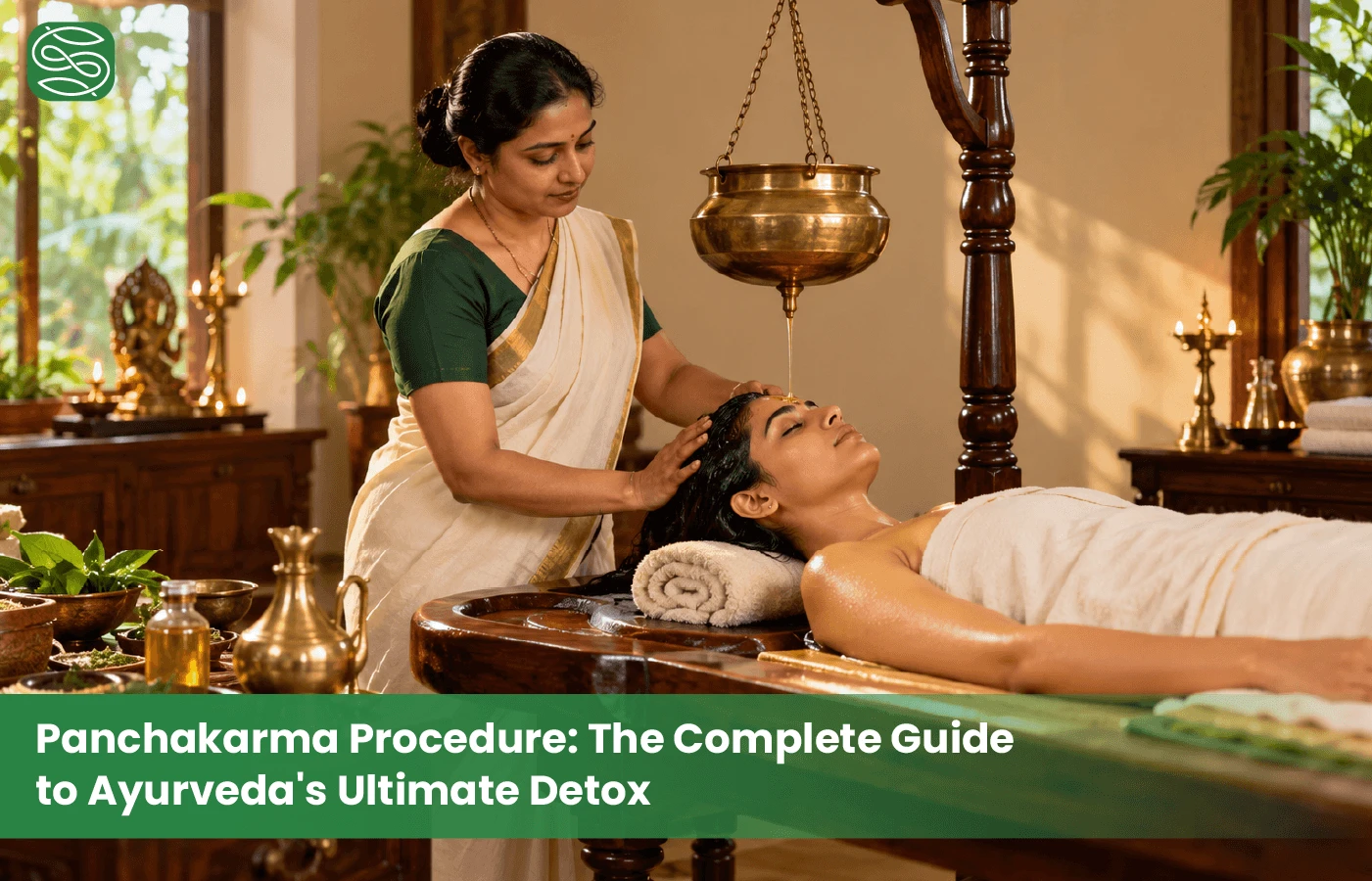
Panchakarma procedure is a physician-guided Ayurvedic treatment that combines preparation, selected cleansing procedures, and recovery care based on an individual’s health condition, digestion, constitution, and treatment goals. It is different from a standard massage or fixed detox package.
1. Treatment plan: Personalized after consultation and health assessment.
2. Main therapies: Selected based on condition, constitution, and treatment goals.
3. Duration: Depends on the therapies planned and individual response.
4. Recovery: Includes diet, rest, lifestyle guidance, and post-treatment care.
5. Cost: Varies based on duration, therapies, and program type.
6. At Shathayu: Planned and supervised by Ayurvedic doctors.
If you’ve been feeling sluggish, bloated, stressed, or just “off” despite eating right and sleeping enough, you’ve probably heard someone recommend Panchakarma. It’s one of the most talked-about wellness treatments in Ayurveda right now and also one of the most misunderstood. Is it a spa package? A medical procedure? A week of oil massages? This guide breaks down exactly what Panchakarma is all about.
If you are searching for Panchakarma procedure in Bangalore, wondering what Panchakarma is, how it works, how many days it takes, what it costs, or whether it is suitable for you, this guide will help you understand the treatment before making a decision.
Panchakarma is one of the most recognized therapeutic approaches in Ayurveda. It is not simply an Ayurvedic massage or a general “detox package”. Classical Panchakarma involves carefully selected therapeutic procedures, preparation, medical supervision and post-treatment care. At Shathayu Ayurveda, Panchakarma procedure is planned after an Ayurvedic doctor’s consultation and assessment of the individual’s constitution, health condition, digestive capacity, lifestyle and treatment goals. Shathayu has been practising Ayurveda since 1901 and currently has 16 clinics across Bangalore.What Is Panchakarma Procedure, Really?
Panchakarma (“pancha” = five, “karma” = actions) is Ayurveda’s flagship detoxification and rejuvenation system. It isn’t a single treatment but a structured, doctor-supervised program built around five core cleansing procedures designed to remove ama (accumulated toxins) from the body and restore balance among the three doshas Vata, Pitta, and Kapha.
Unlike a quick detox tea or a weekend spa retreat, authentic Panchakarma is a clinical process. It’s typically prescribed and monitored by a qualified Ayurvedic physician (BAMS or MD-Ayurveda), and it follows a specific sequence rather than a random mix of massages.The Five Karmas (Ayurveda Detox Procedures)
1. Vamana (Therapeutic Emesis): Medically induced, controlled vomiting used mainly for Kapha-related disorders like chronic respiratory issues, obesity, and certain skin conditions. It requires several days of prep (oleation and sudation) beforehand and close physician supervision.
2. Virechana (Purgation): A cleansing therapy aimed at the lower digestive tract and liver, commonly used for Pitta-related conditions such as psoriasis, eczema, chronic digestive issues, and inflammatory joint disease.
3. Basti (Medicated Enema): Considered the most powerful of the five karmas, especially for Vata disorders. Herbal oils or decoctions are administered rectally to balance Vata and treat conditions like arthritis, constipation, and neurological issues.
4. Nasya (Nasal Therapy): Medicated oils or herbal preparations are administered through the nostrils to clear the head and neck region, used for sinusitis, migraines, and certain ENT conditions.
5. Raktamokshana (Bloodletting): A specialized detoxification technique used for specific blood-related and skin disorders, applied selectively and only when clinically indicated.
The Three Phases of a Panchakarma Procedure
1. Purva Karma (Preparation): Includes Snehana (internal and external oleation with medicated oils) and Swedana(sudation/steam therapy) to loosen and mobilize toxins.
2. Pradhana Karma (Main procedures): The actual karma(s) prescribed Vamana, Virechana, Basti, Nasya, or Raktamokshana.
3. Paschat Karma (Post-care): A carefully graded diet (often starting with khichdi), lifestyle guidance, and rejuvenative (Rasayana) therapies to help the body re-establish digestive strength and absorb the benefits of the cleanse.
Key Benefits of Panchakarma Procedure
While individual results vary and Panchakarma isn’t a cure-all, commonly reported benefits include:
1. Deep detoxification: Clearing accumulated toxins that routine digestion doesn’t fully eliminate.
2. Improved digestion: Restoring Agni (digestive fire), often easing bloating and sluggishness.
3. Stress and anxiety relief: Therapies like Shirodhara (oil-pouring on the forehead) are widely used for insomnia and mental fatigue.
4. Better management of chronic conditions: Including migraines, arthritis, spondylitis, allergies, sinusitis, skin conditions like psoriasis and eczema, and certain digestive disorders.
5. Weight and metabolism support: Some patients report modest fat loss over a program, though this is a secondary effect, not the primary goal.
6. Improved sleep and mental clarity: Structured routines, relaxation practices, yoga, and better sleep habits may help some people feel more rested, focused, and mentally refreshed.
7. General vitality and wellbeing: Regular meals, rest, movement, stress management, and personalized Ayurvedic care may help support overall energy and wellbeing, especially when followed as part of a seasonal wellness routine.
Who Should Consider Panchakarma?
Panchakarma is commonly recommended for people dealing with:
1. Chronic stress, anxiety, or sleep disturbances
2. Digestive issues bloating, acidity, irregular bowel movements
3. Joint and muscular pain, including arthritis and spondylitis
4. Skin conditions like psoriasis, eczema, and chronic allergies
5. Respiratory issues, including sinusitis and mild asthma
6. Post-illness or seasonal recovery and general rejuvenation
7. Professionals dealing with burnout, screen fatigue, or sedentary lifestyle effects (a very common profile among Bangalore’s tech workforce)
It’s not advisable during pregnancy, active infections, certain cardiac conditions, or right after major surgery, always get a proper consultation before signing up, rather than booking based on a discount offer.
Panchakarma Procedure for Disease Conditions
Panchakarma Procedure for Weight Loss
Panchakarma isn’t a crash diet, but it approaches weight gain from a different angle than calorie-counting , it targets the underlying digestion and metabolism rather than just the scale. Therapies like Virechana, Basti, and Udvartana (a herbal powder massage) are used alongside a personalized diet plan to correct sluggish metabolism, reduce water retention and bloating, and address hormonal contributors to weight gain such as thyroid imbalance or PCOD/PCOS. Many Bangalore clinics report patients losing a few kilos over a 14–15 day program, but this is best seen as a metabolic reset rather than a guaranteed fat-loss method sustainable results still depend on the diet and lifestyle changes you maintain afterward, not the detox week alone.
Panchakarma Procedure for Diabetes
For Type 2 diabetes, which Ayurveda links closely to poor metabolism and Kapha imbalance, Panchakarma is generally used as a supportive therapy alongside never instead of conventional medical management. Programs typically combine Virechana or Basti with strict dietary regulation, herbal formulations, and lifestyle correction aimed at improving insulin sensitivity and digestive function. Some longer-term follow-up studies have reported improved glycemic markers a year after a Panchakarma intervention, which is encouraging, but the evidence base is still developing and results vary by individual. Anyone on diabetes medication should continue it as prescribed and keep their endocrinologist informed if they’re also undergoing Panchakarma, since dosage adjustments may be needed as blood sugar responds.
Panchakarma Procedure for Arthritis
This is one of the more well-established uses of Panchakarma, particularly for Vata-driven joint conditions like osteoarthritis and rheumatoid arthritis or any joint pain conditions. Basti (medicated enema therapy) is considered especially effective here, often paired with Ayurveda oil massages , and localized treatments like Janu Basti (oil pooling over the knee) to reduce inflammation and lubricate joints. Patients commonly report reduced pain intensity, less morning stiffness, and lower reliance on painkillers after a full program, with benefits that tend to hold up during the post-treatment rejuvenation phase if diet and joint-care guidance are followed.
Panchakarma Diet: What Can You Eat?
Diet during Panchakarma depends on the stage of treatment and individual prescription.
Commonly recommended foods may include light, easily digestible preparations such as:
1. Rice
2. Green gram
3. Khichdi
4. Vegetable preparations
5. Warm water
6. Physician-prescribed dietary preparations
However, there is no single Panchakarma diet chart suitable for everyone.The diet should change according to the stage of treatment and the person’s digestive capacity.After certain procedures, Ayurveda may prescribe a gradual return to a normal diet.
Panchakarma Massage: Is It the Same as Panchakarma?
This is an important distinction.Panchakarma is not just massage or detox drink. Abhyanga or Ayurvedic oil massage is not the same as Panchakarma. Abhyanga may be used as a preparatory or supportive therapy in certain Panchakarma programmes, but receiving an Ayurvedic massage does not automatically mean that a person has undergone Panchakarma.
Similarly, therapies such as:
1. Shirodhara
2. Kizhi
3. Kati Basti
4. Abhyanga
5. Swedana
May be part of an Ayurvedic treatment programme but should not automatically be described as one of the five Panchakarma procedures.
Who Should Consider Panchakarma Procedure?
Panchakarma procedure may be considered for appropriately selected adults as part of an Ayurvedic treatment or wellness programme.
A doctor may consider factors such as:
1. Current health status
2. Age
3. Strength
4. Digestive function
5. Existing medical conditions
6. Medications
7. Prakriti
8. Treatment objective
9. Ability to follow dietary and lifestyle recommendations
Panchakarma is not automatically appropriate for everyone.
Who Should Avoid Panchakarma?
Panchakarma procedures require individual assessment.
People who are pregnant, acutely unwell, severely weak, recovering from major illness or surgery, or managing significant medical conditions may require special consideration or may not be suitable for certain procedures.
Children and older adults also require individual assessment.
If you have diabetes, cardiovascular disease, kidney disease, liver disease, are taking regular medication, or have recently undergone surgery, discuss your complete medical history with the doctor before beginning Panchakarma.
Is Panchakarma Procedure Safe?
Panchakarma Procedure should be performed under the supervision of a qualified Ayurvedic physician.
Safety depends on:
1. Correct patient selection
2. Proper preparation
3. Appropriate procedure selection
4. Correct dosage
5. Trained therapists
6. Hygiene and infection-control practices
7. Monitoring during treatment
8. Proper post-treatment care
This is why Panchakarma should not be treated as a generic spa treatment. At Shathayu, Panchakarma programmes begin with a physician consultation and are personalized according to the individual’s needs.
How to Choose the Best Panchakarma Centre in Bangalore
If you search for “best Panchakarma treatment in Bangalore”, “Panchakarma centre near me” or “Panchakarma therapy near me,” don’t choose a centre only because of an attractive package price.
Look for:
1. Qualified Ayurvedic doctors: Panchakarma should begin with a proper physician assessment.
2. Personalized treatment: Your treatment should be based on your condition rather than a standard package.
3. Trained therapists: The quality and safety of therapy delivery matters.
4. Hygiene: Treatment rooms, equipment and procedures should follow appropriate hygiene practices.
5. Transparent pricing: You should know what is included before starting.
6. Follow-up care: A good programme should include appropriate post-treatment guidance.
7. Convenient location: For outpatient Panchakarma, proximity can make regular treatment easier.
Panchakarma in Bangalore: Why the City Has Become a Hub
Bangalore has emerged as one of India’s stronger Panchakarma destinations, for a few practical reasons:
1. A large, health-conscious professional population dealing with stress, poor posture, and irregular routines exactly the profile Panchakarma is often prescribed for
2. A growing number of NABH-accredited clinics. The National Accreditation Board for Hospitals (NABH) runs a dedicated Panchakarma Clinic Accreditation Programme that verifies Ayurvedic treatments follow validated protocols under trained supervision, covering hygiene, patient safety, therapy documentation, practitioner competence, and infrastructure readiness. This matters because Panchakarma involves invasive-adjacent procedures (emesis, enemas, bloodletting) that genuinely need clinical rigor.
3. A mix of options from standalone clinics offering short OPD sessions to residential wellness centers offering full 14–21 day immersive programs with accommodation and meals.
Panchakarma Cost in Bangalore (2026)
| Program Type | Duration | Typical Cost Range (Bangalore) |
|---|---|---|
| Single OPD therapy session | Per session | ₹1,500 – ₹5,000 |
| Short outpatient course | 5–7 days | ₹15,000 – ₹30,000 |
| Standard program (outpatient) | 10–14 days | ₹25,000 – ₹45,000 |
| Standard program (residential) | 10–14 days | ₹50,000 – ₹90,000 |
| Extended/intensive program | 14–21 days | ₹40,000 – ₹1,20,000+ |
| Premium residential/wellness retreat | 14–21 days | Up to ₹1,50,000 – ₹3,00,000 |
What Actually Drives the Price Difference?
1. Outpatient vs. residential: Residential packages bundle accommodation, sattvic meals, and 24-hour support, and the room tier (dormitory, standard private, or premium suite) directly moves the overall programme price.
2. Number and type of procedures: A simple Abhyanga-and-Shirodhara wellness package costs far less than a full Vamana or Basti-based clinical protocol.
3. Duration: Longer programs mean more medicated oils, herbal formulations, and physician time.
4. Accreditation and medical supervision: NABH-accredited clinics with MD/BAMS-qualified doctors typically cost more but offer standardized safety protocols.
5. Quality of materials: Authentic, high-grade medicated oils and herbs cost more than generic ones, and this shows up in pricing.
Practical tip: Always ask for an itemized, written quote consultation fee, medicines, number of procedures, diet plan, and follow-ups before committing. A ₹10,000 package and a ₹1,00,000 package are often simply not the same product, so compare what’s actually included rather than the headline number alone.
Does Insurance Cover It?
Yes NABH-accredited Ayurveda Hospitals in Bangalore now accept cashless insurance through select providers and TPAs, particularly for medically prescribed Panchakarma tied to a diagnosed condition rather than a general wellness package. Coverage varies significantly by insurer and policy, so confirm this directly with the clinic and your insurance provider before booking.
How to Choose a Panchakarma Center in Bangalore
With dozens of clinics across the city from Whitefield and Indiranagar to Jayanagar and Yelahanka here’s a practical checklist:
1. Insist on a proper Doctor consultation first, prakriti assessment, dosha analysis, and medical history review, not a one-size-fits-all package sold over a phone call.
2. Ask who supervises the procedure. Qualified BAMS/MD-Ayurveda doctors should oversee the program, not just wellness therapists.
3. Get a written treatment plan and cost breakup before you pay.
4. Ask about the source and quality of oils/herbal formulations used.
5. Check reviews across multiple platforms (Google, Practo, Lybrate) rather than relying only on the clinic’s own website.
6. Clarify emergency protocols. A genuine clinical setup should have a plan for adverse reactions, however rare.
7. Check for NABH accreditation /Credibility of clinics or at least a licensed Ayurvedic medical setup with AYUSH-registered doctors.
What to Expect: A Typical Program Timeline
While every plan is personalized, a standard 14-day Bangalore Panchakarma procedure often looks like this:
1. Day 1: Consultation, pulse diagnosis (Nadi Pareeksha), prakriti assessment, treatment planning
2. Days 2–4: Purva Karma: Internal/external oleation (Snehana) and sudation (Swedana)
3. Days 5–10: Pradhana Karma: The main prescribed procedure(s) such as Virechana, Basti, or Nasya, along with supportive therapies like Abhyanga (oil massage) and Shirodhara
4. Days 11–14: Paschat Karma: Graded diet reintroduction, rejuvenative therapies, lifestyle and diet counseling for post-program maintenance
Common Precautions and Side Effects
Panchakarma Procedure is generally safe when done under proper medical supervision, but it isn’t risk-free:
1. Mild fatigue, light-headedness, or loose stools can occur during purgation or Basti therapy usually temporary
2. It should be avoided during pregnancy, menstruation (for certain procedures), active fever/infection, or right after major surgery
3. People with cardiac conditions, uncontrolled diabetes, or on specific medications should disclose this clearly during consultation
4. Unsupervised or “quick fix” Panchakarma at unlicensed centers carries real risk this is precisely why accreditation and physician supervision matter
Final Thoughts
Panchakarma procedure is genuinely powerful when done right . In a city like Bangalore, where options range from a ₹1,500 single session to a ₹3,00,000 luxury residential retreat, the deciding factor shouldn’t be price alone. It should be medical supervision, transparency, Clinic credibility ,rating ,testimonials and whether the clinic treats Panchakarma as the clinical intervention it actually is.
If you’re considering it, start with a proper consultation, ask for a written plan, and choose a center that’s upfront about costs, procedures, and what results are realistic for your specific condition.
If you are looking for Panchakarma treatment in Bangalore, Ayurvedic Panchakarma therapy, Panchakarma for weight management, or a personalized Panchakarma programme, speak with a Shathayu Ayurveda doctor before deciding which therapy is right for you. Book a Panchakarma consultation with Shathayu Ayurveda and understand your treatment options before you begin.
This article is for informational purposes and isn’t a substitute for professional medical advice. Please consult a qualified Ayurvedic physician before starting any Panchakarma program, especially if you have existing health conditions.