Skip to content
A slipped disc can turn simple movements bending, sitting, walking, or even getting out of bed into a painful challenge. But does every slipped disc need surgery or lifelong painkillers? Not necessarily. Ayurveda approaches slipped disc by looking beyond the pain, focusing on inflammation, muscle tension, nerve irritation and the underlying imbalance affecting the spine. With the right combination of therapies, medicines, movement and lifestyle changes, Ayurvedic care may help support pain relief, mobility and long-term spinal health.
Ayurvedic treatment for slipped disc follows an individualized approach that considers pain, mobility, lifestyle, digestion, body constitution, and the traditional Ayurvedic concept of Vata balance. Depending on the person’s condition, a qualified Ayurvedic doctor may recommend therapies, medicines, dietary guidance, and lifestyle changes to support comfort, mobility, and overall wellbeing.
How It Is Treated
- Evaluation is the first step: The location of pain, mobility limitations, radiating symptoms, numbness, weakness, and available scan reports are reviewed before treatment begins.
- Therapy selection: Depending on the condition, Ayurvedic procedures such as Kati Basti, Abhyanga, Swedana, Basti, or selected Panchakarma procedures may be considered by the doctor.
- Diet and routine: Dietary and lifestyle recommendations may be advised according to digestion, constitution, symptoms, and Ayurvedic assessment.
- Clinical evaluation still matters: Persistent radiating pain, numbness, weakness, or worsening neurological symptoms require proper medical evaluation. Loss of bladder or bowel control, numbness around the groin or saddle area, or rapidly progressing weakness requires urgent medical attention.
That Sharp Pain in Your Lower Back Isn’t Just Bad Posture
Lower back pain may start as a dull ache after a long drive, discomfort while bending down, or pain after lifting something heavy. For some people, the pain gradually becomes more noticeable and begins interfering with activities such as sitting through a meeting, walking comfortably, tying shoelaces, or lifting a child.
A slipped disc, commonly called a slip disc, is more accurately known medically as a herniated disc, is one possible cause of these symptoms. However, back pain does not automatically mean that a disc has herniated, which is why proper assessment matters.
Many people with a herniated disc improve with non-surgical management such as activity modification, physiotherapy, guided exercise, and appropriate medical pain management. Surgery is generally considered only in selected situations.
Some people also explore Ayurvedic treatment for slipped disc as a complementary approach for pain management, movement, lifestyle support, and overall wellbeing. Understanding what Ayurveda can and cannot reasonably offer is important before beginning treatment.
What Causes a Slipped Disc in the First Place?
A spinal disc has a softer, gel-like centre and a tougher outer layer. A herniated disc occurs when part of the inner disc material pushes through or against the outer layer. If nearby nerves become compressed or irritated, symptoms such as radiating pain, tingling, numbness, or weakness may occur.
Several factors can increase the likelihood of disc problems:
- Repeated heavy lifting, particularly when combined with bending or twisting.
- Age-related changes that gradually make spinal discs less flexible.
- Repetitive physical strain during work or other activities.
- Higher body weight, which is associated with increased risk of lumbar disc problems.
- Prolonged sitting and low physical activity may also be associated with lumbar disc problems, although they should not be considered direct causes in every case.
Not every herniated disc produces symptoms. When a nerve root becomes irritated, pain may travel into the leg in lumbar disc problems or into the arm in cervical disc problems. Other people experience mainly back or neck pain, numbness, weakness, or relatively mild symptoms.
How Does Ayurveda Understand a Slipped Disc?
Within the traditional Ayurvedic framework, symptoms associated with a slipped disc may be interpreted in relation to aggravated Vata Dosha, which Ayurveda associates with movement and nervous-system functions.
Pain, stiffness, restricted movement, and weakness may therefore be assessed in relation to Vata imbalance as part of an Ayurvedic consultation. This is a traditional Ayurvedic interpretation rather than the biomedical explanation of disc herniation.
Ayurvedic assessment may include Prakriti or body constitution, digestive health, sleep patterns, stress, lifestyle, and, in some practices, Nadi Pariksha. These assessments help the Ayurvedic doctor individualize care.
They do not replace the clinical diagnosis of a herniated disc. Medical examination, neurological assessment, and imaging such as MRI may be required depending on the symptoms and clinical findings.
Two people with similar MRI findings can also experience very different levels of pain and disability. Treatment therefore needs to consider both clinical findings and the person’s individual symptoms.
According to a study published in Frontiers in Surgery, adolescents and young adults who reported sitting for 6–8 hours a day had 2.43 times higher odds of lumbar disc herniation, while those sitting for more than 8 hours had 2.71 times higher odds compared with participants sitting for 0–2 hours. These findings show an association and do not prove that prolonged sitting alone causes disc herniation.
What Happens During Ayurvedic Treatment for Slipped Disc?
Ayurvedic treatment for a slipped disc is not the same for everyone. After evaluating the patient’s symptoms, pain pattern, mobility, neurological symptoms, medical history and available scan reports, the Ayurvedic doctor develops an individualized treatment plan.
Depending on the condition, the doctor may recommend a combination of Ayurvedic therapies, medicines, dietary guidance, lifestyle modifications and appropriate rehabilitation. The aim is to support pain management, reduce stiffness, improve mobility and help the patient return to daily activities comfortably.
1. Kati Basti
Kati Basti involves retaining warm medicated oil over the lower back using a specially prepared herbal dough ring. It is traditionally used to provide localized warmth and support comfort and flexibility in the lower-back region.
2. Basti
Basti is one of the important Panchakarma procedures in Ayurveda and is traditionally associated with the management of Vata-related disorders. Depending on the individual’s condition, the doctor may prescribe specific oil-based or herbal Basti procedures as part of the treatment plan.
3. Abhyanga & Swedana
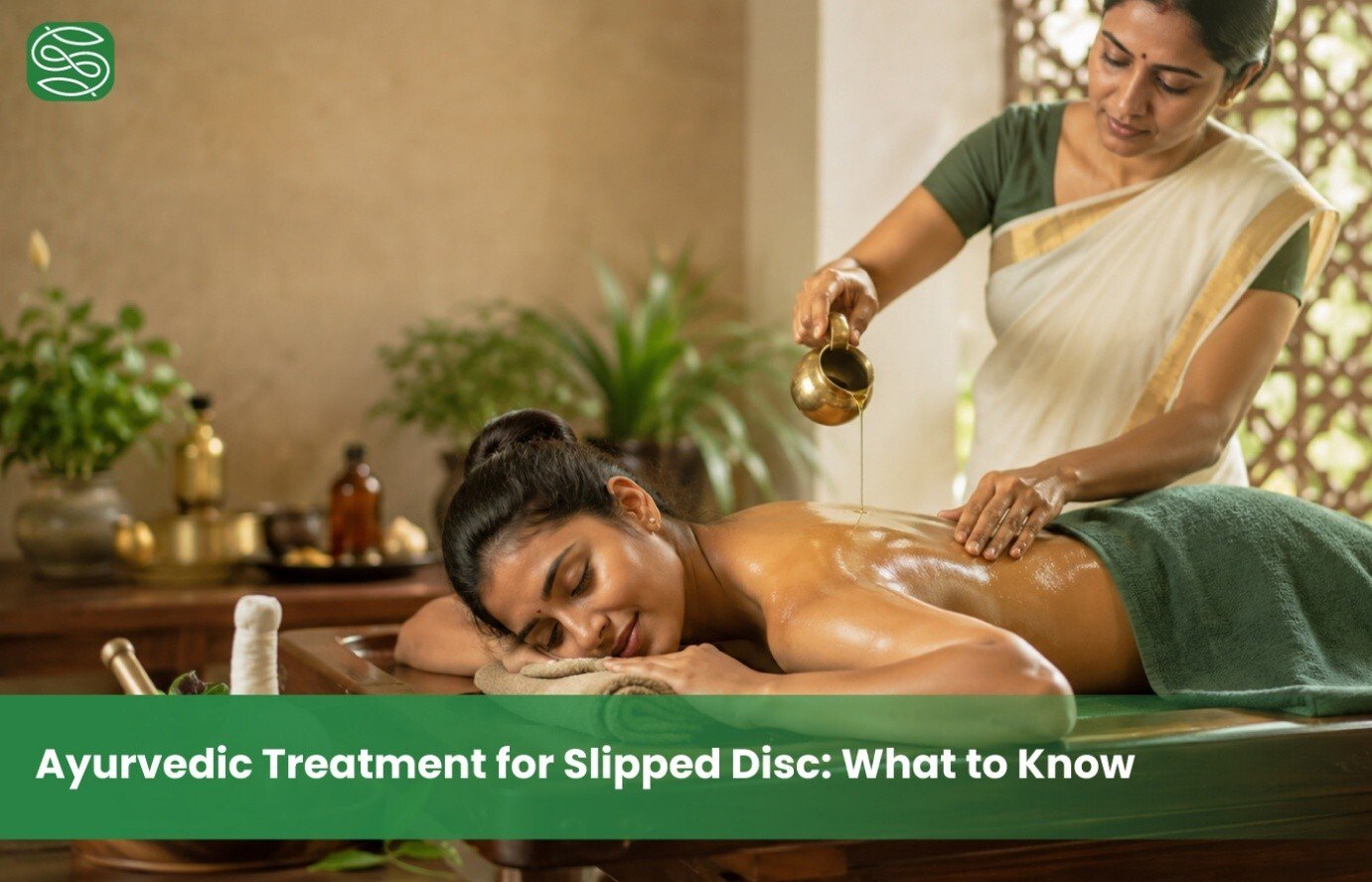
Depending on the patient’s symptoms the doctor may recommend Abhyanga (Ayurvedic oil massage) followed by Swedana (therapeutic fomentation/steam). These therapies may help provide warmth, relaxation and temporary relief from muscular stiffness and discomfort.
4. Agnikarma
Agnikarma is a traditional Ayurvedic heat-based procedure that may be considered for selected musculoskeletal pain conditions. If appropriate, it is performed by a trained practitioner at specific points after assessing the patient’s condition.
5. Selected Panchakarma Procedures
In certain patients, the Ayurvedic physician may consider selected Panchakarma procedures like Nasya or Virechana as part of a broader treatment plan. The choice depends on the individual’s symptoms, strength, digestion, constitution, medical history and treatment goals.
What Does the Doctor Decide?
The Ayurvedic doctor may consider factors such as:
- Where the pain is located and whether it radiates to the arm or leg
- Numbness, tingling or weakness
- Severity and duration of symptoms
- MRI or other available investigation reports
- Mobility and functional limitations
- Age, general health and medical history
- Digestive health and Ayurvedic assessment
Based on this assessment, the doctor may recommend one therapy or a combination of therapies, along with medicines, diet, exercise or physiotherapy guidance where appropriate. The goal is not simply to treat an MRI finding, but to understand the patient’s symptoms and functional limitations and create a treatment plan that is appropriate for their individual condition.
What Role Do Herbs Play in Ayurvedic Treatment for Slipped Disc?
Herbal medicines may form part of an Ayurvedic treatment plan, but the choice, dosage, and combination depend on the patient’s constitution, symptoms, medical history, and other medicines being taken.
Ayurvedic practitioners may traditionally consider herbs and formulations such as:
- Ashwagandha: Traditionally used in Ayurveda as a Rasayana and in formulations intended to support strength and general wellbeing.
- Guggulu: Used in various classical Ayurvedic formulations for musculoskeletal complaints.
- Dashmool: A traditional combination of ten roots used in a variety of Ayurvedic preparations.
- Shunthi or dry ginger: Traditionally used to support digestion and is considered relevant to Vata management within Ayurveda.
These traditional uses should not be interpreted as proof that the herbs repair a herniated disc, strengthen damaged spinal tissue, or directly remove the cause of nerve compression.
Ayurvedic medicines should also not be self-prescribed simply because they are herbal. Dosages, product quality, possible side effects, and interactions with other medicines need to be considered by a qualified practitioner.
What Does the Recovery Journey Actually Look Like?
There is no fixed recovery timeline for a slipped disc.
With conservative management, some people begin feeling better within several weeks, while others may require several months depending on the location and size of the herniation, degree of nerve irritation, neurological symptoms, physical activity, overall health, and response to treatment.
The purpose of treatment in the early stages is generally to manage pain and allow comfortable movement without unnecessarily aggravating symptoms.
As symptoms improve, appropriate movement, physiotherapy, strengthening exercises, or rehabilitation may gradually become more important. The timing should be determined according to the person’s condition rather than a predetermined week-by-week schedule.
Response to Ayurvedic care also varies between individuals, so progress should be assessed according to symptoms, mobility, and overall condition rather than expected according to a fixed treatment timeline.
Regular reassessment helps determine whether conservative care remains appropriate or whether further medical investigation is needed.
What Diet and Habits Should You Follow Alongside Treatment?
Lifestyle habits can support recovery and help reduce unnecessary strain on the back, although no diet or posture routine can guarantee that a herniated disc will heal or never recur.
Ayurvedic physicians may recommend dietary and daily-routine changes alongside Ayurvedic treatment for slipped disc.
- Warm, freshly prepared foods may be suggested as part of a traditional Vata-balancing Ayurvedic diet, depending on individual digestion and constitution.
- Avoid remaining in the same seated or standing position for very long periods. Change positions regularly and follow ergonomic guidance where appropriate.
- Choose a comfortable and supportive sleeping surface. There is no single mattress firmness that is ideal for every person with back pain.
- Avoid heavy lifting or movements that clearly aggravate symptoms, especially repeated bending and twisting while carrying weight.
- Walking and gentle activity are often preferable to prolonged inactivity when tolerated and medically appropriate.
- Dietary restrictions should be individualized rather than assuming that cold, raw, or particular foods directly cause spinal stiffness.
These measures can support general health, movement, and comfort, but recovery from a slipped disc depends on several factors beyond diet and routine alone.
Why Consider Shathayu Clinic for Ayurvedic Treatment for Slipped Disc?
Shathayu Clinic draws on an Ayurvedic lineage that traces back to 1901 and offers individualized Ayurvedic care for a range of musculoskeletal and spinal complaints, including conditions such as spondylitis.
For patients exploring Ayurvedic treatment for slipped disc, care begins with an assessment of symptoms, medical history, available scan reports, Prakriti, digestion, mobility, and overall health.
Depending on the individual, the Ayurvedic doctor may select therapies, medicines, dietary recommendations, lifestyle guidance, and supportive practices. Rather than following the same treatment package for everyone, the plan is adjusted according to the patient’s symptoms and response.
Where clinical or neurological symptoms require further investigation, appropriate medical evaluation remains important.
Final Thoughts
Managing a slipped disc requires an approach based on the severity of symptoms, neurological findings, mobility, and individual health needs.
Many people improve with conservative care, while certain neurological symptoms or persistent problems require further medical evaluation. Ayurvedic treatment for slipped disc may be explored as a complementary, individualized approach focused on symptom support, mobility, traditional therapies, diet, and lifestyle.
At Shathayu Clinic, treatment plans are guided by Ayurvedic doctors and tailored according to the patient’s condition and overall health.
Speak with our doctors to explore a personalized Ayurvedic treatment plan for slipped disc.
Frequently Asked Questions
Can Ayurvedic treatment for slipped disc be combined with physiotherapy?
Ayurvedic treatment and physiotherapy can be part of the same care plan when recommended by the treating professionals. The approach should take into account symptoms, mobility, neurological findings, medical history, and the individual’s overall condition.
What symptoms should be evaluated for a slipped disc?
Persistent back or neck pain, pain travelling into the arms or legs, tingling, numbness, weakness, or difficulty moving should be properly evaluated. Loss of bladder or bowel control, saddle-area numbness, or rapidly worsening weakness requires urgent medical attention.
Does Ayurvedic treatment for slipped disc include dietary changes?
Dietary guidance is often included in Ayurvedic care. Recommendations depend on digestion, constitution, symptoms, and the individual treatment plan rather than following one fixed diet for every person with a slipped disc.
How long does Ayurvedic treatment for slipped disc take?
There is no fixed treatment duration. It depends on the location and severity of the disc problem, neurological symptoms, mobility, overall health, and response to treatment. Progress should be reviewed individually rather than following a predetermined recovery timeline.
Can Ayurvedic treatment prevent slipped disc pain from returning?
No treatment can guarantee that pain will never return. Ayurvedic care may include therapies, movement guidance, diet, posture advice, and lifestyle recommendations intended to support overall wellbeing and long-term spinal health.
How is Ayurvedic treatment for slipped disc different from conventional medical treatment?
Ayurvedic care follows a traditional framework that considers constitution, digestion, lifestyle, symptoms, and dosha balance while planning treatment. Conventional medical care evaluates the disc problem through clinical and neurological findings and may include physiotherapy, medicines, injections, or surgery depending on the condition.
Can Ayurveda be used for cervical disc problems as well?
Ayurvedic treatment plans may also be developed for people experiencing cervical or neck-related complaints. The approach depends on symptoms, clinical findings, location of the problem, and the doctor’s assessment. Neurological symptoms such as arm weakness or persistent numbness require appropriate medical evaluation.
Are there side effects from Ayurvedic treatment for slipped disc?
Responses to Ayurvedic medicines and therapies differ between individuals. Herbal medicines can also cause side effects or interact with other medicines. Treatment should therefore be prescribed and monitored by a qualified Ayurvedic doctor rather than followed through self-treatment.
What happens during the first consultation at Shathayu Clinic?
At Shathayu Clinic, the doctor reviews symptoms, medical history, available scan reports, current medicines, lifestyle, digestion, mobility, and overall health before deciding on an individualized Ayurvedic treatment plan.
How is Ayurvedic treatment for slipped disc planned at Shathayu Clinic?
Treatment is individualized according to the affected spinal area, symptoms, mobility, Prakriti, medical history, and overall condition. The Ayurvedic doctor then selects suitable therapies, medicines, dietary guidance, and lifestyle recommendations.
What should I bring for my consultation at Shathayu Clinic?
If you already have an MRI, bring the report and images to your consultation. They can help the treating team understand the location and extent of the disc problem. Bring previous medical records, and details of medicines or treatments you are currently following. These can help the doctor understand the condition and coordinate the Ayurvedic treatment plan more appropriately.
Treated at Shathayu: speak to an Ayurveda doctor about Ayurvedic pain management at any of our 16 clinics in Bangalore, or book a free consultation.