
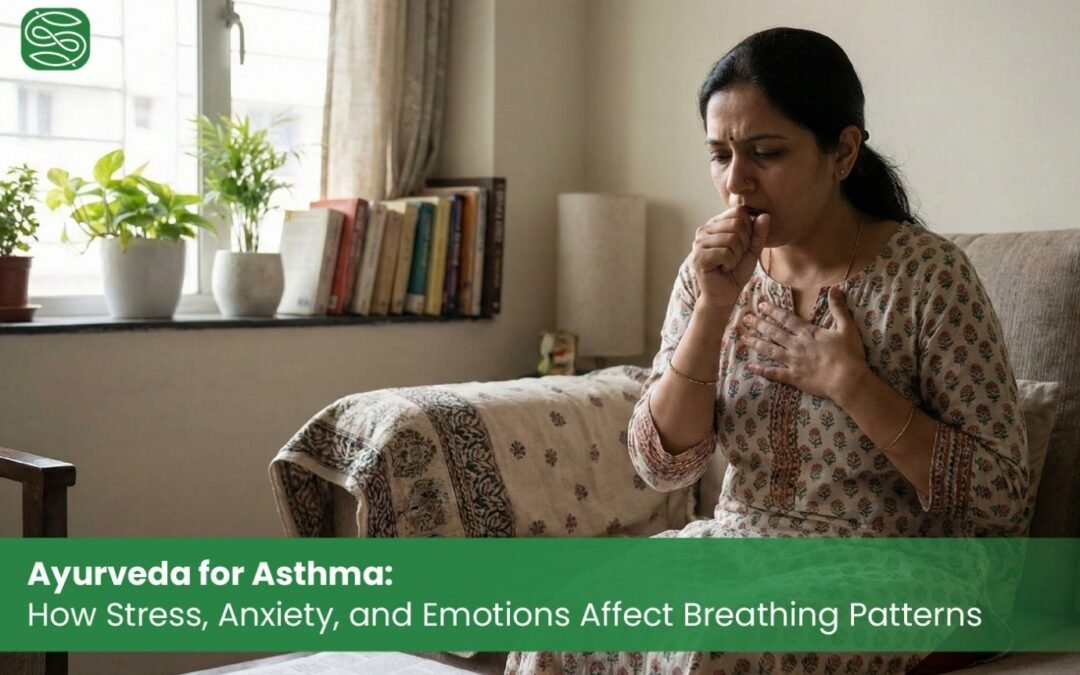
Ayurveda for Asthma focuses on balancing Vata and Kapha, calming emotional triggers, and strengthening lung function through herbs, Panchakarma, breathwork, and lifestyle correction. It views asthma as both a physical and emotional condition, restoring breath by stabilizing the mind and body together. What does Ayurveda for Asthma include? 1. Balancing Vata and Kapha doshas 2. Panchakarma cleansing therapies 3. Herbal formulations to support lung function 4. Breathwork and Pranayama for emotional regulation 5. Diet and lifestyle modifications 6. Ojas-enhancing therapies for better resilience Someone sits beside a window at dusk, watches the color in the sky change, and feels the evening settle. A moment of calm slips away as their chest tightens. The breathing becomes shallow, and the quiet feels heavier than before. This particular experience occurs at random times, usually during the tides of emotion below the surface. The body reflects these inner waves, and the breath becomes the first signal of change. Throughout the centuries, healers have noted the mind’s influence on the lungs, which today is described as sudden breathlessness; earlier, it was understood as the disruption of vital energy. This forms the very cornerstone of Ayurveda for Asthma, where the emotional landscape enjoys prominence no less than physical symptoms. Ayurveda views the breath as a bridge between the conscious mind and the body. When the emotions flow with ease, the breath feels effortless. Whenever the stress increases or anxiety starts circling the mind, the breath tightens. Through this perspective, asthma becomes more than a condition of the respiratory system. It is a pattern shaped by lifestyle, emotional load, diet, environment, and inner rhythm. This deeper understanding helps an individual relate to their symptoms more clearly for holistic healing with Ayurveda for Asthma.

How Do Emotions and Breath Interact in Ayurveda?

Each feeling shows up in how we breathe. When excited, breathing speeds up. If scared, it gets shaky. With worry, breath becomes tense. In Ayurveda, such changes are seen as fluctuations in Prana Vayu – the subtlest part of Vata dosha. As prana flows smoothly, breathing in links with breathing out without effort. If emotions flare up, disrupting prana, tightness takes over the chest, the diaphragm works harder, while air passages react sharply. This glimpse shows how certain moments pop up in heated talks, take over chats, or appear late at night when memories drift back. With Ayurveda for asthma, talking to yourself matters most in getting better, so focus shifts there instead. Yet it’s not just about words; it’s more about how you listen within as things shift slowly.

How Stress and Anxiety Shape Asthmatic Patterns According to Ayurveda

1. Stress and Vata Escalation: Stress produces fast movement of Vata throughout the body. Such movement disrupts lubrication in the respiratory passages, leading to dryness and tightness. The lungs attempt to expand, yet the channels seem to be constricted. The nervous system heightens sensitivity so that minor stimuli seem larger. Here, Ayurveda for Asthma revolves around the stabilization of Vata to restore calmness within the respiratory pathways. 2. Stored Emotions and Respiratory Blockages: Where the unpacified emotions build up, they affect Kapha in the chest, producing heaviness and dullnes. Ayurveda sees this not only as mucus congestion but also as the residual emotions themselves. That is why many people feel chest tightness long before an asthma attack begins. The strength of Ayurveda for asthma lies in building upon those emotional layers rather than treating the lungs in isolation.

What Is Tamaka Shwasa in Ayurveda?

Ayurveda classifies asthma as a Tamaka Shwasa condition, shaped by an imbalance of Vata and Kapha. While asthma symptoms affect the respiratory tract, many of its causes begin in digestion, emotional health, seasonal and daily lifestyle habits.

Key Ayurvedic observations include:

Kapha consequently causes blockage of airflow by thickening the respiratory secretions. 1. Vata provokes spasmodic and erratic breathing. 2. The mandagni, or sluggish digestive fire, increases toxins that then settle in the lungs. 3. Emotional disturbance heightens both doshas together. The beauty of Ayurveda for asthma is its addressing of these dimensions together, taking into account the individual’s experience.

AWhy Emotional Healing Is Essential for Stronger Breathing

Breathing responds immediately to changes in emotion. A tense morning meeting, a troublesome discussion, or even long waiting may affect the expansion of your lungs. Each wave of emotion runs through the nervous system to the respiratory muscles, changing flexibility and rhythm. Ayurveda puts forth the concept of Ojas, the extract of the life force. Emotional stress decreases Ojas, thereby increasing the respiratory system’s reactivity. By nourishing Ojas, Ayurveda strengthens resilience, enabling the person to withstand emotional provocation with steadier breath. Through this understanding, Ayurveda for Asthma creates a path where emotional clarity and physical well-being strengthen each other.

How Does Shathayu Ayurveda Approach Asthma?

Shathayu Ayurveda is recognized as the best Ayurvedic clinic and wellness retreat with a legacy of healing since 1901, integrating classical Ayurvedic knowledge with personalized care. It takes a whole approach, addressing structural, emotional, metabolic, and environmental influences on breathing.

    1. Panchakarma for Detoxification and Channel Clearing

    Panchakarma Therapies such as: – Vamana to clear the Kapha accumulation – Nasyam to purify nasal pathways – Abhyanga to pacify Vata – Swedana to open the channels and relieve chest rigidity These therapies promote the flow of Prana, strengthen the lungs, and reduce the frequency of respiratory discomfort.

      2. Herbal Wisdom to Strengthen Prana

      Shathayu physicians prescribe formulations that support lung vitality, including: 1. Vasaka to dilate the airways 2. Kantakari to decrease congestion in the chest 3. Yashtimadhu for soothing irritated tissues. 4. Pippali: for improving metabolic fire and lessening sensitivity. These herbs align with Ayurveda philosophy for asthma and offer focused, yet gentle support.

        3. Breathwork for Emotional Regulation

        Personalized breathing exercises improve how you breathe while boosting lung strength. Methods like Anulom Vilom or step-by-step Pranayama help people tune back into their breath, getting both brain and body used to a slower pace. This lowers how strongly emotions affect asthma symptoms, which often make them worse.

          4. Diet, Lifestyle, and Seasonal Routines

          Ayurveda insists on the principle of aligned living. 1. Warm, light, nourishing foods support digestion and reduce the buildup of Kapha. 2. Daily routines anchor the mind, keeping vata steady. 3. Seasonal guidelines prepare the body for weather changes that influence breathing.

            5. Mind–Body Therapies for Emotional Ease

            Shirodhara, Aroma Therapy, and energy-balancing treatments create deep relaxation. As the nervous system softens, so the breath expands. This is the innate synergy at the heart of Ayurveda for Asthma, and emotional care is not separated from respiratory care.

              Why Choose Shathayu Clinic for Ayurveda for Asthma ?

              Shathayu Clinic offers asthma care rooted in more than a century of Ayurvedic knowledge, combined with current medical practices. Instead of just treating symptoms, it looks at how emotions and body function together. Through methods such as Panchakarma, custom herb-based treatments, or mindfulness support, the clinic supports deep recovery. Because each plan fits the person, results tend to last longer. For sustainable help with breathing issues, this center stands out clearly.

              Conclusion

              Shathayu Clinic provides a clear, caring method for handling asthma. Through tailored herbal therapies along with mental wellness support, it enables patients to reduce flare-ups while improving daily living. Instead of short fixes, it focuses on lasting results using body cleansing techniques followed by breathing practices. For anyone looking beyond conventional care, this center delivers balanced recovery grounded in tradition yet adapted to modern needs.

              FAQs

              K
              L
              1. What role do feelings play in asthma symptoms?
              Stress or worry can block Prana - your body’s vital energy, causing chest tension, uneven breaths; this may intensify asthma. A disrupted airflow often follows emotional strain, making breathing harder over time.
              K
              L
              2. What role does Ayurveda play in supporting emotional well-being for people with asthma?
              Ayurveda supports Ojas, the vital energy, while fostering calm emotions; it also enhances breathing function, which helps lessen asthma episodes.
              K
              L
              3. What Ayurvedic treatments help asthma?
              Panchakarma therapies support lung health while stabilizing emotions. With Vasaka, herbal options pair well with Yashtimadhu for better breathing. Through Pranayama, breath exercises also promote calmness.
              K
              L
              4. How does Ayurveda improve breathing?
              Ayurveda uses herbs along with breath work to improve breathing, ease symptoms, while soothing nerves.
              K
              L
              5. Does Ayurveda help with what triggers asthma?
              Indeed,Ayurveda regulates bodily humors, enhances digestive function, while supporting daily habits and mental wellbeing to address asthma at its core.
              K
              L
              6. How does Ayurveda suggest adjusting daily habits to help with asthma?
              Ayurveda recommends warm, simple meals; a steady daily rhythm, alongside shifts based on seasons - to help avoid asthma symptoms while boosting respiratory wellness.