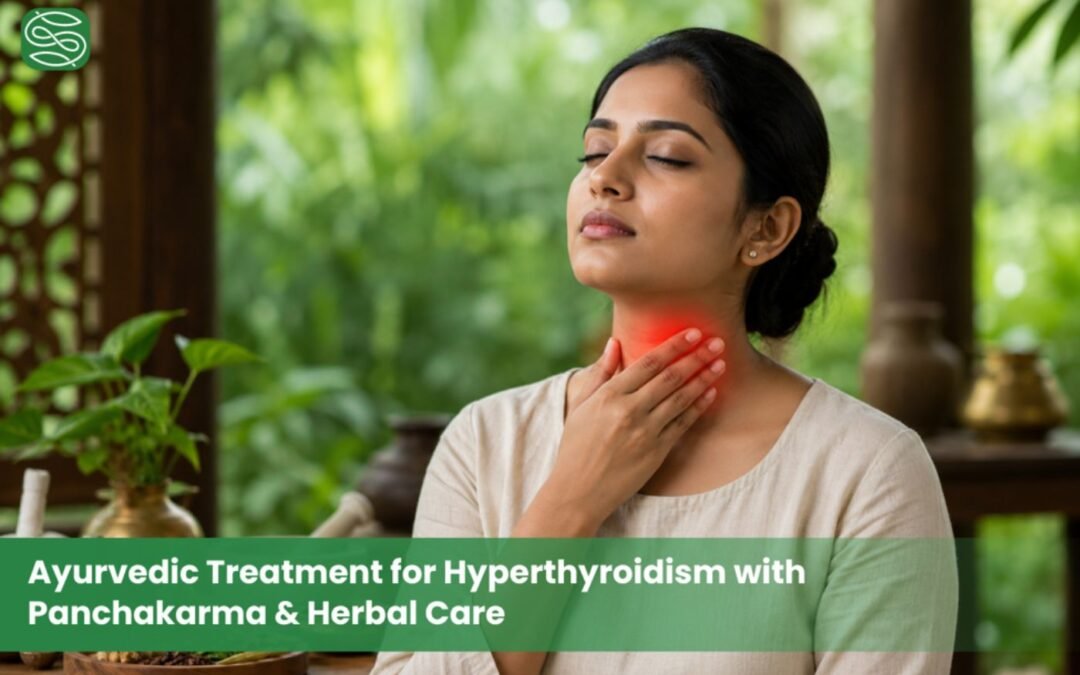
Ayurvedic treatment for hyperthyroidism focuses on calming aggravated Pitta and Vata, supporting metabolism, and reducing symptoms such as anxiety, palpitations, tremors, and sleep disturbance.
Treatment may include cooling herbs, Panchakarma therapies, diet correction, and lifestyle regulation under medical supervision.
Treatment highlights:
1. Balances Pitta and Vata doshas
2. Supports thyroid and metabolic balance
3. May include herbs like Shatavari, Brahmi, Jatamansi, Guduchi, and Kanchanar Guggulu
4. Uses Panchakarma therapies such as Virechana, Shirodhara, Nasya, and Abhyanga
5. Focuses on cooling, grounding, and non-stimulating foods
6. Should be used alongside conventional care when required
Ananya was experiencing unexplained weight loss, heart palpitations, hand shivering in meetings, and insomnia. Her test reports showed elevated T3 and T4 levels with decreased TSH. She was diagnosed with hyperthyroidism.
Her doctor prescribed her anti-thyroid medicines. Her hormone levels stabilized; however, her anxiety issues, fatigue, and stomach problems persisted. The medicine was addressing the issues shown in the test reports. But the medicine didn’t deal with the cause of Ananya’s thyroid problem.
This is where Ayurvedic treatment for hyperthyroidism at Shathayu Clinic in Bangalore is relevant.
What Is Hyperthyroidism and Why Does It Keep Coming Back?
This condition is difficult to manage because it is often driven by multiple underlying factors. Although medications may help in controlling the levels of hormones in the body, they do not address the underlying conditions of immune dysregulation, chronic stress, and digestive malfunction, among others.
Here comes the role of Ayurvedic therapy in curing hyperthyroidism.
NHANES III data reported that 1.6% of people aged 12 and above had low serum TSH levels, showing that thyroid overactivity is a measurable public health concern.
Symptoms that may indicate the need for Ayurvedic treatment for Hyperthyroidism: A
1. Racing heart and palpitations even at rest
2. Unexplained weight loss despite eating normally
3. Anxiety, irritability, and difficulty concentrating.
4. Excessive sweating and heat intolerance
5. Disturbed sleep and persistent fatigue
6. Tremors in the hands
7. Irregular or absent menstrual cycles in women
8. Frequent bowel movements
How Ayurveda Sees Hyperthyroidism Differently A
Hyperthyroidism, according to Ayurveda, is primarily caused by Pitta-Vata imbalance. Excess Pitta, which regulates heat and metabolic processes, speeds up all bodily functions beyond normal, including the thyroid gland. If the body is excessively stimulated by Vata, the nervous system becomes agitated, leading to palpitations and stress, while Vata’s imbalance disrupts the body’s equilibrium, causing weight loss, fatigue, and other signs of hyperthyroidism associated with Kapha deficiency.
The concept of ama is also widely used in Ayurveda to explain this pathology. In cases of inefficient metabolism, ama appears as metabolic waste that obstructs the body’s passages and causes hormonal imbalance and autoimmunity.
Therefore, unlike traditional medicine, which targets hormone synthesis, Ayurvedic therapy aims to balance Pitta and Vata, eliminate ama, and restore tissue and hormonal balance.
What Triggers Hyperthyroidism and What Ayurveda Does About It ?
2. Chronic stress can be considered the common denominator for all patients. The constant tension in their professional or personal lives causes chronic hypervigilance and intensifies both Pitta-Vata imbalance and thyroid hyperactivity. At Shathayu, stress does not play a secondary role; it plays the primary one. Chronic stress can further disturb hormone balance, sleep, digestion, and nervous system function, making thyroid management more difficult. To understand this connection better, you can also check our page on Ayurvedic treatment for stress and how it supports lasting mind-body balance.
3. Irregular diet and lifestyle, skipping meals, shorter sleeping hours, excessive consumption of spices and processed foods disrupt Vata and diminish Agni.
4. Autoimmune dysfunction that occurs due to disorders such as Graves’ disease is described within the context of Ayurvedic medicine as an inability of the body to recognize its own intelligence. The use of immunomodulators and Panchakarma therapy works by correcting this dysfunction.
A clinical review by the National Library of Medicine notes that Graves’ disease affects about 2% of women and 0.5% of men globally and remains the most common cause of hyperthyroidism.
Ayurvedic Treatment for Hyperthyroidism at Shathayu Clinic, Bangalore
Every program begins with a comprehensive assessment of the patient’s constitution, dosha status, thyroid medical history, current medications, digestive health, sleep cycle, stress levels, and associated symptoms.
1. Patient Consultation and Assessment by Physicians: No therapy process will commence without a proper assessment conducted by the physician at Shathayu Clinic. This step helps to identify the specific herbs for treatment, therapies required, changes to diet, and the sequence for conducting the program. Two people who have identical medical issues can have totally different therapy regimes, because their bodies are affected by different factors.
2. Herbal Formulations: The herbs are used as single drugs based on the constitution and symptoms exhibited:
a) Brahmi is used for patients with an active nervous system, palpitation, and anxiety, and brings about mental clarity.
b) Ashwagandha is used to support stress relief, adrenal function, and hormonal regulation, making it very effective for sleep problems and fatigue.
c) Kanchanara Guggulu directly affects the thyroid gland, reducing inflammation and promoting proper functioning.
d) Shatavari builds up depleted tissues and cools the Pitta dosha while balancing the body’s hormones, especially in cases of menstrual problems.
e) Jatamansi relieves anxiety, brings about good sleep, and regulates the body’s state of being overstressed due to hyperthyroidism.
f) Guduchi deals with the immune component of the disease.
3. Panchakarma Therapies: Panchakarma forms the basis of Ayurvedic clinical treatment for hyperthyroidism at Shathayu. The treatments chosen are based on an individual’s assessment:
a) Virechana (Purgation): It helps eliminate excess Pitta from the gut and liver, thereby correcting inflammation and excessive metabolism, which are responsible for thyroid gland hyperactivity.
b) Basti (Enema It helps correct Vata imbalances in the body, making the nervous system and hormonal regulation easier.
c) Shirodhara: : Pouring warm medicated oil on the forehead for 30–45 minutes. This is considered to be one of the best treatments for lowering cortisol and helping with insomnia and anxiety associated with hyperthyroidism.
d) Nasya (nasal therapy): Helps clear the upper head region and nervous system imbalances, as well as goiter/neck problems when present.
e) Abhyanga (oil massage): Calms excess Vata in the body, nourishes the weakened body, and stimulates the parasympathetic system.
4. Therapeutic Diet: At Shathayu, diet is prescribed as part of the clinical program, not as general wellness advice. The kitchen and medical team coordinate at every stage. For hyperthyroidism, the dietary framework is Pitta-calming and Kapha-building:
a) Cool, earthy foods like whole grains, cooked vegetables, ghee, dairy products, root vegetables, and fruits.
b) Eating at specific times to create a consistent digestion pattern and prevent Vata disturbance.
c) Non-stimulating, fresh, and warm meals throughout the protocol, corresponding with the Panchakarma phase.
d) Freshly prepared warm meals at every stage of the program, aligned with the Panchakarma phase.
The diet protocol for Hyperthyroidism will be Pitta-soothing and Kapha-supporting:
5. Yoga, Pranayama, and Daily Routine:Daily yoga and breathwork at Shathayu are structured therapeutically for hyperthyroid patients, not as general exercise:
a) The poses of Sarvangasana and Halasana increase circulation to the thyroid area.
b) Sheetali and Sheetkari Pranayama reduce Pitta dosha and lower the sympathetic nerve stimulation.
c) Yoga Nidra and Meditation lower the amount of cortisol and restore sleep structure.
6. Duration of the Program and Monitoring: The duration of the program at Shathayu varies from 14 to 21 days, depending on the progression of cleansing, balancing the Pitta and Vata doshas, tissue nutrition, and the body’s metabolic balance. Physician monitoring of this program continues throughout the process and takes into account progress made. All existing thyroid medication is reviewed during the initial consultation and coordinated with the treatment approach.
• Consistent Dinacharya (daily routine), fixed sleep and meal times, reduced screen exposure, and morning oil application are prescribed alongside clinical treatment and maintained throughout the program.
Who Should Consider Ayurvedic Treatment for Hyperthyroidism in Shathayu Clinic Bangalore?
Those undergoing antithyroid medication with ongoing symptoms of anxiety, tiredness, disturbed sleep, or digestive problems.
Women with Graves’ disease or hyperthyroidism-induced menstrual disorders.
Those who have had a recurrence after discontinuing their medication and want lasting stability.
Subclinical hyperthyroidism sufferers want to avoid progression.
Conclusion
For those looking to manage thyroid health with a root-cause-focused Ayurvedic approach alongside conventional care, Shathayu Clinic in Bangalore offers medically guided consultation and treatment.
Book your consultation with Shathayu Clinic today and take the next step toward balanced thyroid health.